
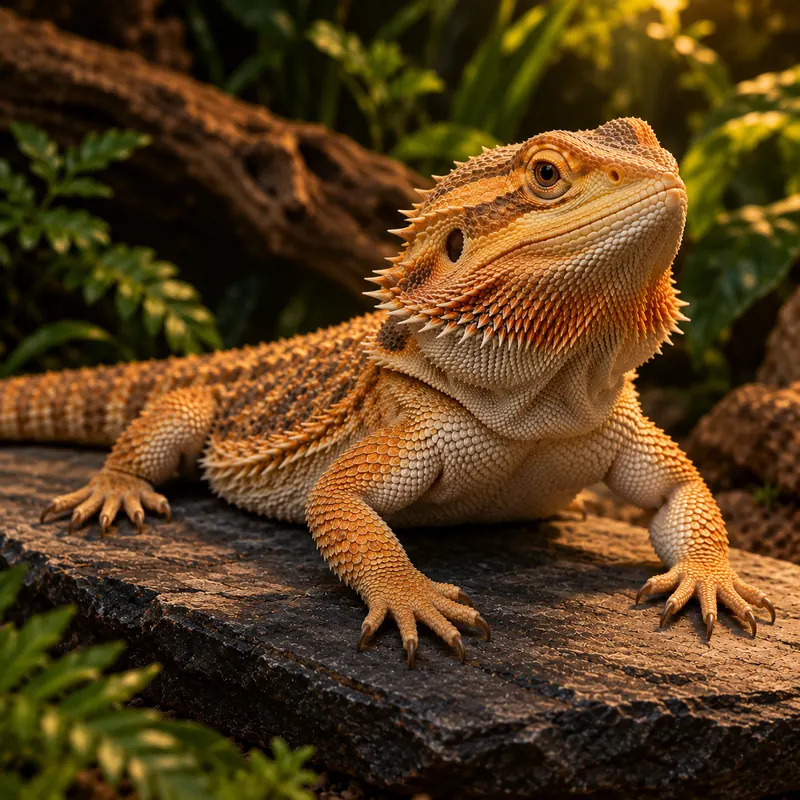
The first week is about letting your dragon get used to its new home. Keep handling to a minimum, keep the lights and temperatures steady, and watch quietly. Most of what looks odd in the first days is normal, and a few signs are worth a call to the vet.
Before day one
Your enclosure should already have run for at least a week with steady temperatures, as the RSPCA advises. If it has not, set it up first using the setup checklist and check the numbers on the lighting and heating page.
Also line up a reptile vet now, not when something goes wrong. The ARAV keeps a Find A Vet directory of reptile and amphibian vets.
Day one: the move
- Bring the dragon home in a secure, warm carrier and go straight there.
- Place it gently in the enclosure, near the warm side or the hide.
- Offer water in the dish and a few greens. Do not worry if it ignores both.
- Step back and leave it alone. Lights and heat stay on their normal timer.
Days two to seven: hands off
ReptiFiles says most sources recommend letting a new dragon settle for about two weeks before handling. During that time:
- Do your daily jobs calmly: spot-clean, fresh water, food.
- Move slowly around the enclosure. ReptiFiles notes that quick movements look like a predator.
- Let the dragon get used to you. ReptiFiles suggests leaving a worn shirt in the enclosure and offering greens by hand.
- Check temperatures daily. The RSPCA suggests checking both ends with an infrared thermometer.
When to start handling
After the settling period, start short and simple:
- Never grab from above or surprise the dragon. The RSPCA warns this causes stress and a struggle.
- Support all four feet. ReptiFiles says a dangling foot makes a dragon thrash.
- Keep sessions short. The RSPCA suggests around 10 to 15 minutes at a time, depending on room temperature.
- Do not pull at shedding skin. Both the RSPCA and ReptiFiles warn it can tear the new skin underneath.
Wash your hands after handling. The RVC notes that all reptiles can carry Salmonella.
Not eating at first
Some new dragons eat little while they adjust. Before you worry:
- Check the basking temperature with your infrared gun. Dragons need heat to digest, and a cool basking spot is a common reason for a poor appetite.
- Check the UVB is on and at the right distance.
- Offer food in the morning, after the dragon has warmed up.
- Check insect size. ReptiFiles says no wider than the gap between the eyes.
If a young dragon has not eaten for several days with correct temperatures, or any dragon is losing weight, call your reptile vet.
Normal behaviors
| Behavior | What it usually means |
|---|---|
| Head bobbing | Fast bobbing is usually dominance or courtship, mostly by males. A slow bob can acknowledge another dragon (LIBEVC vet clinic, ReptiFiles). |
| Arm waving | A slow circular wave of one front leg, usually a submissive “I am not a threat” signal, often seen in younger dragons (LIBEVC, ReptiFiles). |
| Gaping while basking | Mouth open to shed excess heat. Normal at the basking spot (LIBEVC, ReptiFiles). |
| Glass surfing | Running against the walls. The LIBEVC clinic links it to stress, boredom or a wish to explore; check the setup and add enrichment. |
| Black beard | Usually stress, fear or aggression (LIBEVC). ReptiFiles adds that it can mean pain or being too cold, except in a male showing off to a female. |
| Flattening | ReptiFiles calls “pancaking” flat against the ground a fear signal. In the first week, this usually means “give me space”. |
A dark beard or glass surfing that keeps going after the first week is worth investigating. Recheck temperatures, make sure the dragon cannot see another reptile, and add cover.
Warning signs: call a reptile vet
- Not eating and losing weight
- Constipation or diarrhea along with weight loss (the RSPCA flags these as possible parasite signs)
- Dull or cloudy eyes (the RSPCA lists clear, bright eyes as a sign of health)
- Frequent gaping away from the basking spot (ReptiFiles says frequent gaping can mean illness)
- A swollen jaw or limbs, twitching, or trouble walking
- Long-lasting black beard with lethargy
This is general guidance, not veterinary advice. When in doubt, call your vet.
Keep it apart from other reptiles
If you already keep reptiles, house the new dragon in a different room and use separate tools for it until a reptile vet has checked it, ideally including a fecal test for parasites. Ask your vet how long to keep it apart. Never put it in with another dragon: the RSPCA and ReptiFiles both advise housing dragons alone.
Brumation basics (for later)
Brumation is a seasonal slowdown, a bit like hibernation. It is unlikely in your first week, but worth knowing:
- When: ReptiFiles says it usually starts after the first year of age and lasts about 2 to 4 months.
- Signs: eating less, hiding and sleeping more, staying on the cool side (ReptiFiles); lethargy and darker coloring (VCA Canada).
- Weight: ReptiFiles says weigh weekly; losing more than 10% of starting weight means the dragon is ill and needs a vet. The RSPCA says a brumating dragon should not lose weight or stop eating entirely.
- Do not assume: VCA Canada warns that a lethargic, non-eating dragon kept indoors may be sick rather than brumating, and that only healthy dragons should brumate. Have a reptile vet check it first.
Keep a simple log
A notebook or phone note makes it much easier to spot a problem, and gives your vet real information if you need one. Each day, jot down:
- Basking surface and cool-end temperatures, plus the overnight low
- What the dragon ate, and roughly how much
- Whether it pooped, and what it looked like
- Anything unusual: a dark beard, glass surfing, hiding all day
After a week you will know what normal looks like for your own dragon.
Your first-week checklist
- Enclosure ran at least a week with steady temperatures
- Reptile vet found and number saved
- Two weeks of minimal handling
- Daily temperature checks at both ends
- Fresh water daily
- Food offered in the morning, uneaten insects removed
- Notes on eating, droppings and behavior
For the first two weeks, your job is to be boring. Steady heat, steady light, quiet hands. A dragon that feels safe starts eating and exploring on its own.