
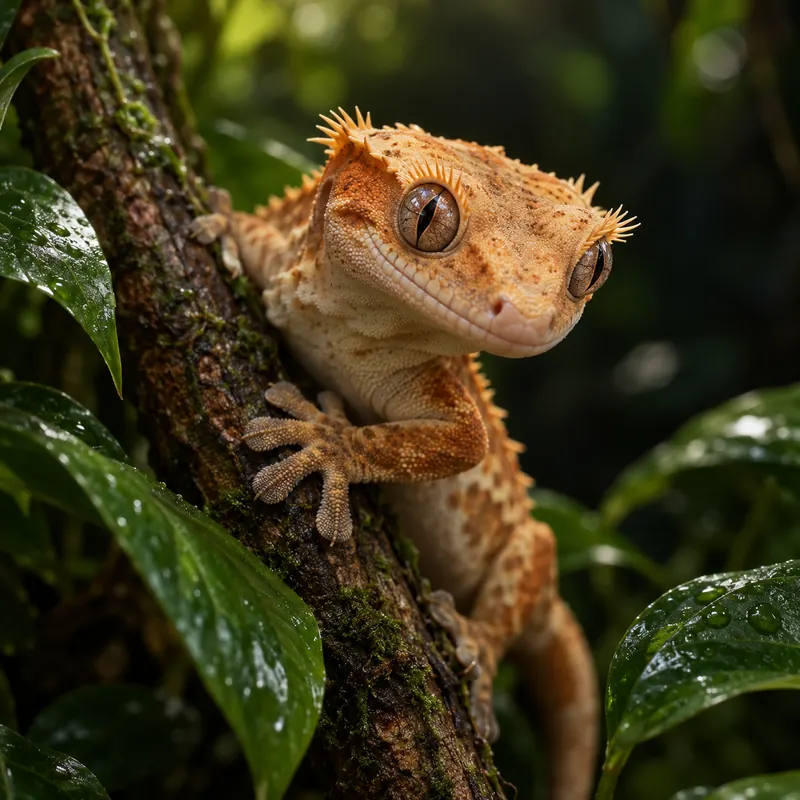
A crested gecko’s setup is less about heat and more about height, humidity and keeping things from getting too warm. Build the terrarium first, run it for about a week, and bring the gecko home only once the temperature and humidity numbers behave the way you expect. The RSPCA gives the same advice: run the vivarium for a week before the gecko moves in.
This checklist covers every item, why it matters, and the order to put it together.
The core kit
-
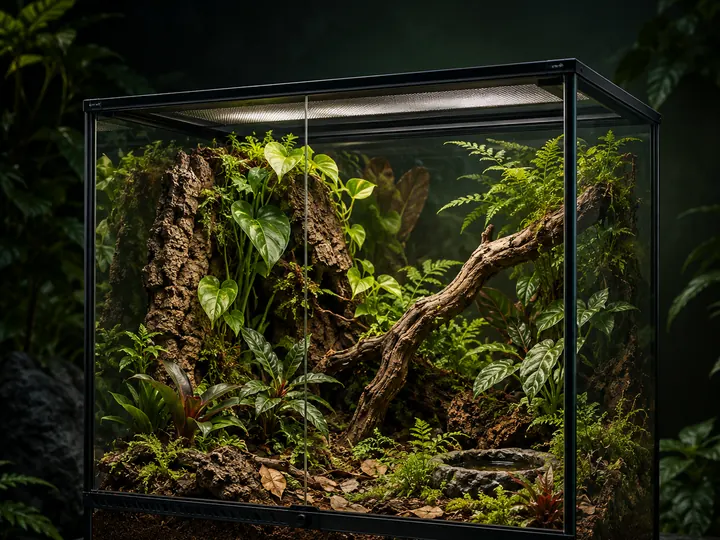 Tall terrarium Tall front-opening glass terrarium, 18 x 18 x 36 in (45 x 45 x 90 cm) Amazon
 - Tall terrarium Tall front-opening glass terrarium, 18 x 18 x 36 in (45 x 45 x 90 cm) Amazon UK
-
 UVB kit Arcadia ShadeDweller ProT5 UVB Kit (7%, 8 W, 12 in) Amazon
 - UVB kit Arcadia ShadeDweller ProT5 UVB Kit (7%, 8 W, 12 in) Amazon UK
-
 Mister One-hand pressure sprayer, about 1 liter Amazon
 - Mister One-hand pressure sprayer, about 1 liter Amazon UK
- Thermometer and hygrometer Zoo Med Digital Thermometer and Humidity Gauge (TH-31) Amazon
- Thermometer and hygrometer Zoo Med Digital Thermometer and Humidity Gauge (TH-31) Amazon UK
-
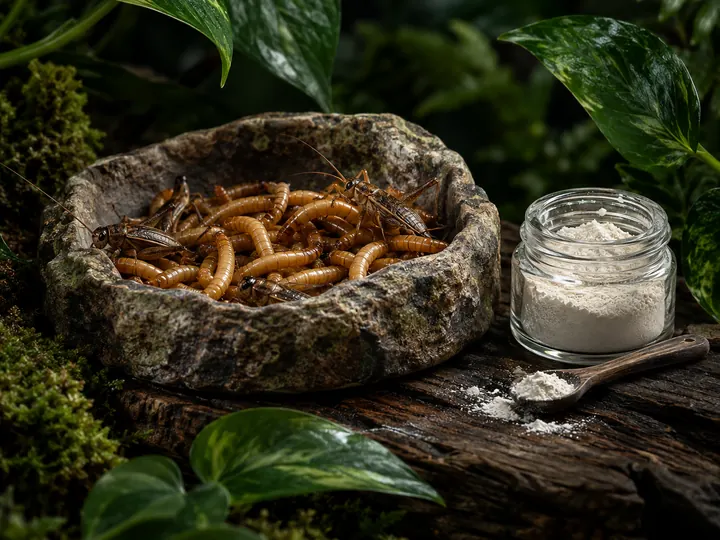 Complete diet Pangea Fruit Mix with Insects Complete Gecko Diet, 2 oz Amazon
 - Complete diet Pangea Fruit Mix with Insects Complete Gecko Diet, 2 oz Amazon UK
The checklist at a glance
| Group | What you need |
|---|---|
| Enclosure | Tall, front-opening glass terrarium, ideally 18 x 18 x 36 in (45 x 45 x 90 cm) for an adult |
| Lighting | Low-output T5 UVB tube, on a timer for about 12 hours a day |
| Heat | Only if your room runs cool: one small lamp on a dimming thermostat |
| Humidity | Sprayer or automatic mister, moisture-holding substrate, a hygrometer |
| Climbing and cover | Branches at many heights, plants, cork bark hides |
| Food and water | Complete powdered diet, feeding ledge and cups, calcium, water dish |
| Monitoring | Digital thermometer and hygrometer with a probe, a gram scale |
| Health | A reptile vet found in advance |
1. Enclosure
Height matters more than floor space, PetMD notes, because crested geckos climb. Sources give different minimums:
- ReptiFiles: 18 x 18 x 36 in (about 45 x 45 x 90 cm) for any gecko over 12 g, and 12 x 12 x 12 in (30 x 30 x 30 cm) for hatchlings under 12 g.
- RSPCA: at least 45 cm wide, 60 cm tall and 45 cm deep (about 18 x 24 x 18 in) for an adult.
- RVC: at least 45 x 45 x 60 cm.
- PetMD: 20 gallons or more for one gecko.
The 18 x 18 x 36 in size meets all four. The RSPCA prefers glass to wood because of the humidity. Front doors that lock, and a mesh top for the UVB lamp, make life easier. The enclosure size guide goes into layout.
Terrarium
Tall front-opening glass terrarium, 18 x 18 x 36 in (45 x 45 x 90 cm)
Crested geckos live up in the branches, so height matters more than floor space. This link searches for the 18 x 18 x 36 inch (about 45 x 45 x 90 cm) size that ReptiFiles gives as the minimum for juveniles and adults, which is taller than the 45 x 45 x 60 cm minimum set by the RSPCA and the Royal Veterinary College.
- Target size
- 18 x 18 x 36 in (about 45 x 45 x 90 cm)
- Material
- Glass, as the RSPCA and RVC prefer
- Access
- Front-opening doors with a lock
- Top
- Mesh, so a UVB lamp can sit on it
Best for
One adult crested gecko, with room for branches, plants and a vertical temperature gradient.
Worth knowing
Check all three measurements: many "tall" tanks are only 24 in (60 cm) high. Look for front-opening doors that lock and a mesh top for the UVB lamp. Glass holds humidity well, so make sure there is some ventilation.
2. Lighting and UVB
Crested geckos are most active at dawn, dusk and night, but they still need a clear day and night. The RSPCA and RVC both suggest about 12 hours of light, on a timer, with all lights off at night.
For UVB, the RVC says crested geckos appear to benefit from it and recommends a low-output lamp. The RSPCA asks for a 5 to 7% tube. Mount it on the mesh top over one side, so there is always shade below.
UVB kit
Arcadia ShadeDweller ProT5 UVB Kit (7%, 8 W, 12 in)
A short T5 UVB lamp made for shade-dwelling and crepuscular species, supplied with its fitting and a removable reflector. ReptiFiles names the 12 inch 7% ShadeDweller for adult crested geckos, and the RSPCA asks for a 5 to 7% lamp.
- UVB
- 7% (UVA 17%)
- Power
- 8 W
- Length
- About 12 in (30 cm)
- Type
- T5 with removable reflector
Best for
Giving a crested gecko low-level UVB at the top of a tall terrarium, with shade below.
Worth knowing
ReptiFiles gives a distance of about 8 to 12 in (20 to 30 cm) from lamp to gecko when the lamp sits on a mesh top. Leave plenty of plants and shade, and replace the tube on the maker's schedule.
3. Temperature, and a ceiling
Crested geckos are comfortable close to room temperature. The danger is heat, not cold.
- Warm spot at the top: about 79 to 82°F (26 to 28°C) per the RSPCA and RVC; ReptiFiles gives 82 to 85°F (28 to 29°C).
- Cooler lower area: about 68 to 75°F (20 to 24°C) per the RSPCA; ReptiFiles gives 70 to 75°F (21 to 24°C).
- Night: a drop to about 64 to 72°F (18 to 22°C) is fine, per the RSPCA and ReptiFiles.
- Ceiling: ReptiFiles warns that sustained temperatures above 85°F (29°C) risk heat stress. PetMD advises avoiding long spells above 80°F (27°C).
If your room is cool, add a small heat lamp, always on a dimming thermostat. If your room is warm, skip the lamp and watch the top-of-tank reading on hot days.

Small heat lamp (only if needed)
Exo Terra Daytime Heat Lamp, low wattage (about 25 W)
A small white-light incandescent heat bulb. ReptiFiles suggests starting with a 25 W Exo Terra Daytime Heat Lamp and adjusting from there, to give a gentle warm spot near the top of the terrarium.
- Type
- Incandescent, white light
- Starting wattage
- About 25 W, per ReptiFiles
Best for
A cool room where the top of the terrarium will not reach the basking range on its own.
Worth knowing
Only if needed, always on a dimming thermostat, and in a dome with a ceramic socket. Turn it off at night. In a warm room it may not be needed at all.
Thermostat (US)
Exo Terra Dimming and Pulse Proportional Thermostat
A reptile thermostat with both dimming and pulse-proportional control and a waterproof probe. Dimming suits a small heat lamp, and pulse control suits heat mats and ceramic heaters.
- Model
- PT2461
- Max load
- 300 W
- Range
- 64 to 100°F (18 to 38°C)
- Control
- Dimming and pulse proportional
Best for
Keeping a low-wattage heat lamp from pushing the top of the terrarium past a safe temperature.
Worth knowing
Put the probe at the basking branch, where the gecko actually sits, and check it with a separate thermometer.
Thermostat (UK)
Habistat Dimming Thermostat, Classic Range (600 W)
A UK-made dimming thermostat for heat lamps. It turns the lamp down smoothly as the probe reaches the set temperature instead of switching it fully on and off.
- Max load
- 600 W
- Control
- Dimming
Best for
Running a small basking lamp in a UK terrarium with a firm ceiling on temperature.
Worth knowing
It has a minimum load, so very low-wattage bulbs may not dim correctly. Check the minimum against your bulb before buying.
The lighting and heating guide has the full temperature table and what to do in a heat wave.
4. Humidity and misting
Humidity should rise after misting and then fall again. Sources give different numbers:
- RSPCA: about 40 to 50% normally, raised up to 80% by spraying.
- RVC: 50 to 70%.
- ReptiFiles: 60 to 80%, letting it dry to about 50% (or even 40%) before misting again.
- PetMD: 70 to 80%.
The common thread is a daily mist, usually in the evening, followed by a drying-out period. Constant wetness invites mold, as ReptiFiles warns. A hand pressure sprayer is enough. An automatic mister helps if you are often out in the evening.
Hand sprayer
One-hand pressure sprayer, about 1 liter
A pump-up garden sprayer gives a fine, steady mist without the hand cramp of a trigger bottle. Crested geckos mostly drink droplets from leaves and glass, so one good misting a day matters.
- Capacity
- About 1 liter
- Type
- Pump-up pressure sprayer
Best for
The daily evening misting, on any budget.
Worth knowing
Keep it for the terrarium only. Never use one that has held weedkiller, fertilizer or cleaning products.
Automatic mister
Exo Terra Monsoon Solo II Misting System
A compact programmable mister with a small pump, one adjustable nozzle and a built-in reservoir. You set how often and how long it mists, so the evening misting happens even when you are out.
- Model
- PT4200
- Reservoir
- 1.5 L
- Nozzles
- 1 included, takes a second
- Pump pressure
- 2.5 bar (36.25 psi)
Best for
One terrarium, when you want a reliable evening mist without a hand sprayer.
Worth knowing
Mist, then let the terrarium dry out. A mister on too often keeps everything wet, which encourages mold. Use a hygrometer to set the timer.
5. Substrate
- Juveniles under about 13 g: paper towel, as ReptiFiles suggests, to avoid swallowing loose substrate.
- Larger geckos: coconut fiber or a soil and coconut mix, 2 to 4 in (5 to 10 cm) deep, per ReptiFiles. The RSPCA suggests coconut coir or soil topped with moss or leaves.
- Bioactive: a drainage layer, a soil mix, leaf litter, live plants and a cleanup crew. The RSPCA suggests considering this for permanent housing.
Substrate (US)
Zoo Med Eco Earth Coconut Fiber, 1 brick
A compressed coconut fiber brick that expands in water into a soft, moisture-holding substrate. ReptiFiles lists Eco Earth among suitable crested gecko substrates.
- Material
- Coconut fiber
- Pack
- 1 compressed brick
Best for
A 2 to 4 in (5 to 10 cm) humidity-holding floor layer in a simple setup.
Worth knowing
ReptiFiles suggests paper towel instead for geckos under about 13 g, because of the impaction risk from loose substrate. Keep it damp, not soggy.
Substrate (UK)
Exo Terra Plantation Soil, 8.8 L brick
A compressed coconut fiber brick from Exo Terra. ReptiFiles lists Plantation Soil among suitable crested gecko substrates, and the RSPCA suggests coconut coir.
- Material
- Coconut fiber
- Volume
- 8.8 L when expanded
Best for
A humidity-holding floor layer in a UK terrarium.
Worth knowing
Use paper towel for very small juveniles. Spot clean daily and replace monthly unless the setup is bioactive.
6. Branches, plants and hides
Fill the height. Run branches across and up the terrarium at different angles, add plenty of leaves, and give the gecko hides off the ground. The RSPCA suggests cork bark tubes and half coconut shells, and links floppy tail syndrome to a lack of climbing space. The RVC suggests hides at both the warmer and cooler ends.
Climbing hide
Zoo Med Natural Cork Bark Round, Large
A hollow tube of natural cork bark that can stand upright as a climbing hide or lie at an angle as a ramp. The RSPCA suggests cork bark tubes as hiding spots.
- Material
- Natural cork bark
- Size
- Large (varies)
- Model
- CF9-L
Best for
A daytime hide up off the floor, and a climbing route between levels.
Worth knowing
Wedge it firmly so it cannot topple onto the gecko. Natural pieces vary in size.
7. Food and water
- A complete powdered diet from a brand ReptiFiles recommends, such as Pangea or Repashy.
- A feeding ledge with small cups, fixed high on the glass.
- Calcium powder for dusting insects.
- A water dish, kept fresh. The RSPCA and RVC both ask for water to always be available, changed daily.
Complete diet
Pangea Fruit Mix with Insects Complete Gecko Diet, 2 oz
A complete powdered diet that you mix with water. Pangea lists fruit plus cricket and black soldier fly larva protein. ReptiFiles lists Pangea among the prepared diets it recommends.
- Form
- Powder, mixed with water
- Protein
- Includes crickets and black soldier fly larvae
- Size
- 2 oz
Best for
The everyday staple meal, rotated with at least two other flavors or brands.
Worth knowing
Mix only what will be eaten and remove leftovers. Rotating brands and flavors, as ReptiFiles suggests, keeps a fussy gecko interested.
Feeding ledge
Komodo 2-Cup Magnetic Feeding Ledge
A magnetic ledge that clips to the glass and holds two small cups, one for the mixed diet and one for water, up where a crested gecko spends its time.
- Cups
- 2
- Mount
- Magnetic
- Width
- About 10 in
Best for
Serving the prepared diet high in the terrarium, as ReptiFiles suggests.
Worth knowing
Magnets need glass thin enough to hold through. Wash the cups daily.
The diet guide covers feeding amounts and insects.
8. Monitoring
- A digital thermometer and hygrometer with the probe near the warm spot. PetMD advises checking both daily.
- A gram scale for regular weigh-ins. The RSPCA and ReptiFiles both suggest weighing to track health.
Thermometer and hygrometer
Zoo Med Digital Thermometer and Humidity Gauge (TH-31)
A small digital gauge with a probe that shows temperature and humidity on one screen. ReptiFiles names this Zoo Med gauge for crested gecko setups.
- Display
- Digital
- Probe
- Waterproof
- Battery
- 1 x LR44
Best for
Watching the top-of-tank temperature and the humidity cycle after each misting.
Worth knowing
Put the probe near the basking branch, not on the floor. Buy two if you want a reading at the top and bottom.
The order to set it up
- Place the terrarium in a room that stays comfortable all year: away from sunny windows, radiators and drafts, at a height where you can reach in from the front.
- Add substrate and dampen it, or lay paper towel for a juvenile.
- Fix branches, cork and plants from the floor to near the top. Wedge everything so it cannot fall.
- Fit the feeding ledge high up, and a water dish.
- Fit the UVB kit on the mesh top over one side, plus the heat lamp and thermostat if you need them. Put the thermostat probe at the warm branch.
- Set the light timer to about 12 hours.
- Place the gauge probe near the top branch.
- Run everything for about a week. Check the top temperature morning and afternoon, mist each evening, and watch how humidity rises and falls. Adjust until the warm spot stays below 85°F (29°C) on the warmest day.
Only when the numbers are steady is it time for the gecko. The first week guide covers what happens next, and the common mistakes list is worth reading now.
A quick daily routine once it is running
- Evening: mist, offer fresh diet (daily for juveniles, every two to three days for adults, per ReptiFiles), change the water.
- Morning: remove old diet, spot clean waste, glance at the top temperature and humidity.
- Weekly: weigh the gecko, check the thermostat probe is in place, wash the feeding cups and water dish well.
- Monthly: a full clean of a simple setup, as the RSPCA and RVC suggest.
Before you bring the gecko home
Find a vet who treats reptiles. The RSPCA advises registering with a specialist reptile vet in advance, and the RVC recommends a yearly health check. If you already keep reptiles, plan a separate quarantine setup, covered in the first week guide. This page is general guidance, not veterinary advice.
The full shopping list, with a pick for every item, is on the supplies page.
Build it tall, keep it gentle, and test it for a week. A crested gecko that arrives into a setup that never gets too hot or stays too wet has the easiest start you can give it.