
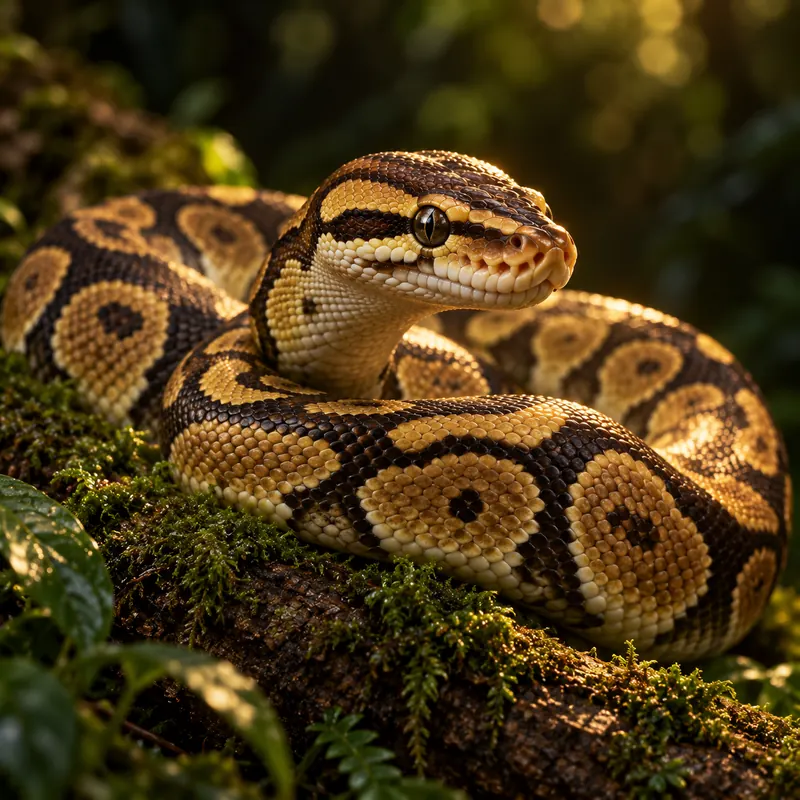
Ball pythons eat whole rodents, and nothing else. In the wild their diet is almost entirely rodents (Animal Diversity Web), and in captivity a whole mouse or rat gives them everything they need. The RSPCA notes that supplements are generally unnecessary with good-quality prey.
Frozen-thawed vs live
Feed frozen-thawed prey. VCA, PetMD and the RSPCA all recommend it, and VCA and PetMD advise against live prey altogether.
The reason is safety. A live rodent can fight back, and VCA warns that even a small bite from a mouse can cause a severe, potentially life-threatening infection in a snake. Frozen prey also stores for months and is easier to buy in the right size.
If a snake truly refuses frozen-thawed prey, some keepers offer freshly killed or live prey for a while. ReptiFiles says to supervise the whole time and remove any uneaten prey after 15 to 30 minutes. Never leave a live rodent in the enclosure unattended. VCA notes that wounds from prey need prompt veterinary care.
Prey size
Sources describe the right size in two ways:
- By width: the RSPCA says slightly wider than the widest part of the snake’s body. PetMD says no wider than the snake’s midsection.
- By weight: ReptiFiles suggests prey of about 10 to 15% of the snake’s body weight. A 400 g snake would get a 40 to 60 g rodent.
Weighing gives you a number you can repeat, which is why a gram scale is worth having. As the snake grows, move up through larger mice to rats, so that one prey item stays the right size.
How often to feed
Feeding frequency is another area where sources differ, so here is the range.
| Age | RSPCA | PetMD | VCA (snakes in general) |
|---|---|---|---|
| Young / juvenile | Every 5 to 6 days | Weekly (hatchlings every other day) | About twice a week for small, young snakes |
| Adult | Every 7 to 14 days, depending on weight | Every 1 to 2 weeks | Once every week or two |
A reasonable middle ground for most keepers is every 5 to 7 days for young, growing snakes and every 7 to 14 days for adults, adjusted to keep a healthy weight. Feeding big meals too often can make a snake overweight, so watch the scale rather than the calendar.
Ball pythons are mostly active at night, and PetMD suggests feeding in the evening.
How to thaw and warm prey safely
- Thaw in the fridge overnight, as ReptiFiles suggests, in a sealed bag.
- Warm it before feeding. Seal the rodent in a bag and put it in warm water for about 15 to 30 minutes.
- Check it is warm all the way through. ReptiFiles aims for 98 to 100°F (37 to 38°C), measured with an infrared thermometer. Ball pythons find prey partly by heat, so warm prey gets a better response.
- Never microwave prey. PetMD advises against it.
- Never refreeze prey once thawed.
Feeding day
- Use tongs. The RSPCA advises offering prey with tongs, which keeps your hand out of the strike.
- Feed in the enclosure. The RSPCA and ReptiFiles both suggest feeding in the home enclosure. Moving the snake to a separate box can stress it.
- Wiggle gently. Hold the prey near the hide entrance and move it slightly. Let go once the snake strikes and coils.
- Leave it alone afterward. The RSPCA advises waiting 48 hours after a meal before handling, as handling too soon can cause the snake to bring the meal back up.
Feeding tongs
Stainless Steel Feeding Tongs (about 10 to 12 in)
Long stainless tongs for offering thawed prey, so the snake strikes at the rodent and not your hand.
- Material
- Stainless steel
- Length
- About 10 to 12 in
Best for
Every feed. The RSPCA advises feeding with tongs.
Worth knowing
Hold the prey by the scruff or tail and let go as soon as the snake strikes and coils.
Food strikes: when they are normal
Ball pythons are well known for skipping meals. Some causes are normal, some are not.
Often normal:
- Shedding. Many snakes refuse food when their eyes turn blue before a shed.
- A new home. VCA notes that stress from a new setting can cause a snake to stop eating.
- Cooler months and breeding season. ReptiFiles notes wild adults eat about 10 times a year and may fast in cooler months. VCA lists breeding and egg-bearing as times when refusal can be normal.
- “The Wall.” ReptiFiles describes some young females that stop eating at about 800 to 1000 g.
Worth fixing or checking:
- Wrong temperatures, humidity or too few hides. ReptiFiles says to check these first.
- Too much handling. Pause handling until the snake eats.
- Illness. VCA lists mouth infections, parasites, respiratory disease and other problems as possible causes.
Weigh weekly during a fast. ReptiFiles says skipped meals are acceptable as long as the snake stays healthy and loses no more than 10% of its body weight. If it loses more, loses weight quickly, or shows any other sign of illness, see a reptile vet. The RSPCA advises a vet visit for a snake that stops feeding. This is general guidance, not veterinary advice.
Gram scale
Digital Scale That Reads in Grams
A kitchen-style digital scale. Weighing your snake and its prey in grams is the simplest way to spot weight loss and size meals.
- Units
- Grams
- Capacity
- 2 kg or more
Best for
Weekly or monthly weigh-ins, and checking prey is about 10 to 15% of the snake's weight.
Worth knowing
Pick one that reads to at least 2 kg (about 4.4 lb) and use a tub on top to hold the snake.
Buying and storing frozen prey
- Buy from a reptile supplier that sells frozen rodents graded by weight or size, so you can match prey to your snake.
- Keep it in a separate freezer bag or box, clearly labeled, away from family food.
- Wash your hands after handling prey and after feeding. VCA notes that good hygiene is the main protection against Salmonella, which any reptile can carry.
- Use tongs, not fingers, and clean them after each feed.
Mice or rats?
Both work. Small ball pythons start on mice. As they grow, move up through larger mice to rats, so that one prey item stays the right size. Some snakes are reluctant to switch prey type. ReptiFiles suggests trying a different rodent species if a snake refuses, so if a switch does not go well, go back to what it was eating and try again later.
Regurgitation
A snake that brings a meal back up a day or two after eating is not the same as one that refuses food. ReptiFiles warns that handling too soon after a meal can cause it. Leave the snake alone, check your temperatures, and ask a reptile vet when and what to offer next. If it happens more than once, or the snake seems unwell, book a vet visit.
Water
Provide a large bowl of clean water at all times, on the cool side. The RSPCA asks for it to be changed at least daily and right away if soiled, and VCA recommends a heavy bowl that is hard to tip. ReptiFiles notes that plain tap water is fine for drinking and that distilled water is not better.
The first week guide covers when to offer the first meal, and the FAQ answers more feeding questions.
Frozen-thawed, warmed through, about as wide as the snake, offered with tongs. Then weigh the snake, not the calendar, to know whether it is eating enough.