
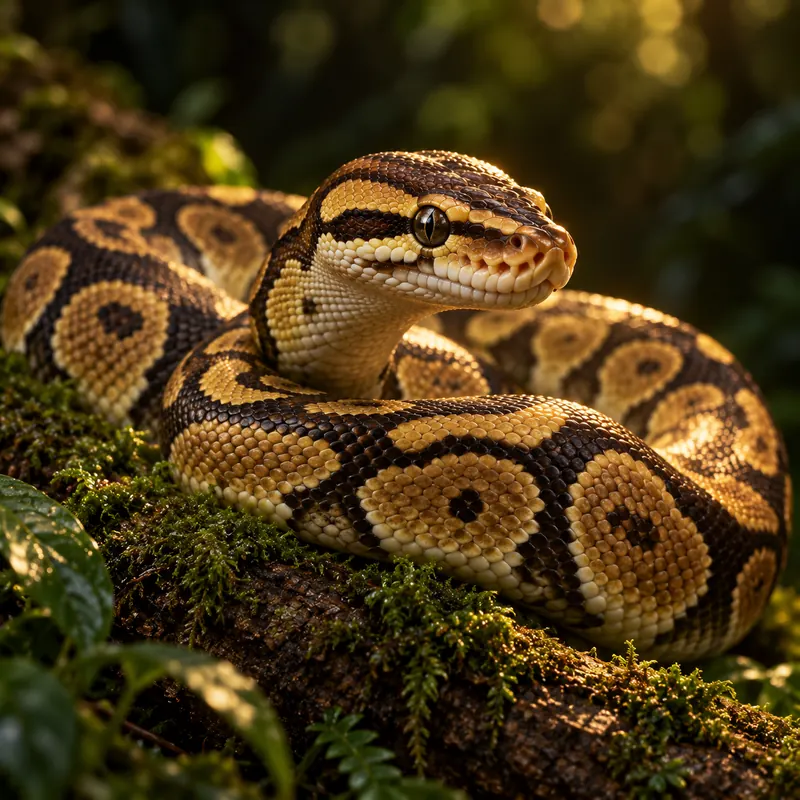
The first week is mostly about leaving your snake alone. A new ball python has just been moved, boxed and carried somewhere strange, and the kindest thing you can do is give it a warm, quiet, well-hidden home and wait.
Before it arrives
Your enclosure should already have run for about a week with steady temperatures and humidity. If you have not done that yet, start with the setup checklist.
Ask the breeder or store:
- When did it last eat, and what (mouse or rat, and roughly what weight)?
- Is it eating frozen-thawed prey?
- When did it last shed?
Those answers tell you when to offer the first meal and what to offer.
Day one: straight in, then hands off
Place the snake gently in its enclosure, close and lock the door, and walk away. Check the temperature and humidity, make sure there is fresh water, and leave it.
Hiding is normal. A new ball python may spend nearly all of its first days, and sometimes weeks, in a hide. That is a snake feeling safe, not a snake in trouble. Do not lift hides to check on it.
Keep the room calm: no loud music next to the enclosure, no tapping on the glass, and no lifting the snake out to show visitors.
A simple plan for the first two weeks
| When | What to do |
|---|---|
| Day 1 | Into the enclosure, door locked, lights on their timer. Check temperatures and water, then leave it. |
| Days 2 to 6 | Check temperatures and humidity once or twice a day. Change water when soiled. Spot clean only if needed. Do not handle. |
| Around its usual feeding day | Offer a thawed meal with tongs in the evening. Remove it if not eaten. |
| Week 2 | Keep the routine. Weigh the snake if it is calm and has not just eaten. Book the vet check. |
| After about two weeks, once eating | Start short, gentle handling sessions. |
When to handle
ReptiFiles advises waiting two weeks, or until the snake is eating regularly, before handling. The idea is to let it link its new home with safety and food first.
After that:
- Handle one or two times a week, no more than once a day (ReptiFiles), for about 10 to 15 minutes at a time (RSPCA).
- Wait 48 hours after a meal before handling (RSPCA).
- Skip handling during a shed, when the eyes are blue and the snake cannot see well.
How to pick up a ball python
- Wash your hands before and after. PetMD notes reptiles can carry Salmonella.
- Let it know you are coming. ReptiFiles suggests gently touching the snake with a paper towel roll or snake hook so it knows this is handling, not feeding. Wait for calm, slow tongue flicks.
- Lift from the middle with both hands, one hand supporting the front third and the other under the back half. The RSPCA advises always supporting the whole animal and never grabbing.
- Never lift by the tail. ReptiFiles warns this can injure the spine.
- Keep a loose grip and let the snake move through your hands. Wrapping around your arm is normal.
- Keep it away from your face and neck, and always supervise children.
Leave it alone if it curls into a tight ball, which signals stress (ReptiFiles), or pulls its neck into an “S” shape, which the RSPCA describes as a sign it feels threatened.
When to feed
Offer the first meal around the time it would normally eat, based on what the seller told you, once it has had a few quiet days. Use frozen-thawed prey of the same type and size it was eating, warmed through, offered with tongs in the evening.
If it refuses, do not worry. Stress from a new setting is a common reason for refusal (VCA). Remove the prey, check your temperatures and hides, and try again at its next normal feeding time. Weigh it so you can track any loss. The diet guide explains food strikes in detail.
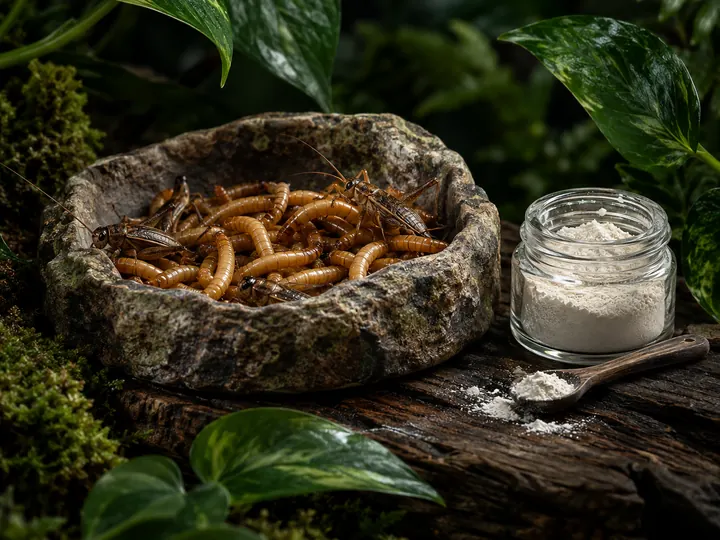
Feeding tongs
Stainless Steel Feeding Tongs (about 10 to 12 in)
Long stainless tongs for offering thawed prey, so the snake strikes at the rodent and not your hand.
- Material
- Stainless steel
- Length
- About 10 to 12 in
Best for
Every feed. The RSPCA advises feeding with tongs.
Worth knowing
Hold the prey by the scruff or tail and let go as soon as the snake strikes and coils.
Shedding signs
ReptiFiles says a healthy ball python sheds roughly every 4 to 6 weeks, and PetMD notes young snakes shed more often than adults. Signs a shed is coming:
- Dull, milky skin.
- Blue, cloudy eyes. This is the clearest early sign.
- Hiding more, refusing food, or being defensive.
The eyes usually clear again before the old skin comes off. Raise humidity a little, make sure the humid hide is damp, and leave the snake alone. Do not pull at the old skin. A good shed comes off in one piece.
Quarantine
If you have other reptiles, keep the new snake apart. VCA suggests at least one month. ReptiFiles recommends two to three months, ideally in a separate room. Handle the new snake last, and wash your hands between enclosures.
Find a reptile vet
VCA advises a check-up with a reptile-experienced vet within a week of bringing a new snake home, with a fecal test for parasites, and then at least once a year. Find your vet now, before you need one in a hurry.
Warning signs
This is general guidance, not veterinary advice. See a reptile vet if you notice:
- Breathing problems: rattling, clicking or whistling sounds, gasping, bubbles or stringy saliva at the mouth (ReptiFiles, RSPCA).
- Mites: tiny black dots moving on the snake or around its eyes and vent; a snake soaking in its water for long periods; ash-like specks on the scales (ReptiFiles, RSPCA).
- Regurgitation: bringing a meal back up after eating.
- Stuck shed, especially retained eye caps. VCA warns retained eye caps can lead to permanent eye damage.
- Cloudy eyes outside a shed, blisters, swellings, discharge from the vent, or lethargy (PetMD).
- Weight loss of more than 10% of body weight.
Burns, wounds from prey and any unexplained lump also need a vet, as VCA notes.
A quiet room, a warm hide, and your hands kept to yourself. Give a new ball python a couple of quiet weeks and nothing to worry about, and let it come out on its own terms.