
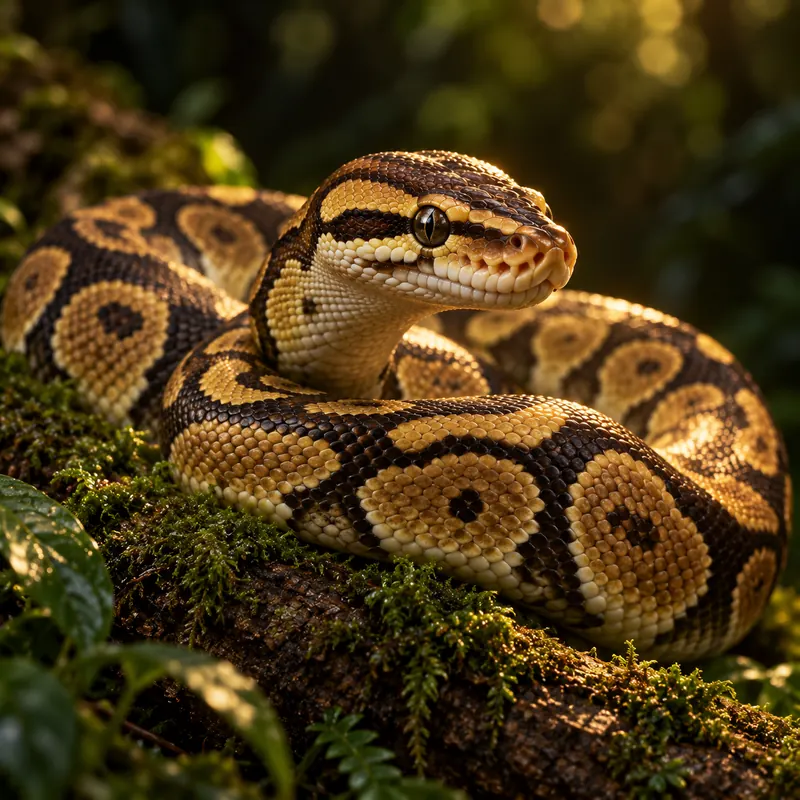
For an adult ball python, a 4 x 2 x 2 ft (120 x 60 x 60 cm) enclosure is the size most current guidance points to. Smaller can be legal and survivable, but bigger gives you room for a proper temperature gradient, plenty of cover, and a snake that actually moves around.
How big: what the sources say
Good sources do not agree on a single number, so here is the range.
| Source | Adult guidance |
|---|---|
| ReptiFiles | 48 x 24 x 24 in (120 x 60 x 60 cm) or larger for snakes over 3 ft. About 8 sq ft of floor and at least 2 ft of height if you use other dimensions. |
| RSPCA | Length at least the snake’s length; depth and height at least one third of its length. A 120 cm snake needs at least 120 x 40 x 40 cm. |
| PetMD | 40 gallons or more for adults, 10 to 20 gallons for juveniles, and the largest habitat possible. |
| VCA | The largest cage possible; small snakes can start in 10 to 20 gallons but need more space as they grow. |
Adult ball pythons usually reach about 3.5 to 5 ft (105 to 150 cm), with females usually larger than males (RSPCA, ReptiFiles). A 4 x 2 x 2 ft enclosure meets every guideline above for a typical adult, and it leaves space for a warm end and a cool end that are truly different.
Juveniles. ReptiFiles allows a 10 gallon tank or tub for hatchlings up to about 300 g. Some keepers go straight to the adult enclosure, packing it with extra cover so a small snake still feels hidden. Either way works if the temperatures and humidity are right and the snake has plenty of snug places to hide.
Glass vs PVC vs wood
The material matters more for ball pythons than for many reptiles, because they need humidity.
- PVC is light, strong and holds heat and humidity well. Most PVC enclosures are opaque on every side but the front, which many ball pythons find reassuring. ReptiFiles prefers PVC models with a mesh top for lamps and airflow.
- Wooden vivariums are the norm in the UK. They hold heat well. Seal the joints if you keep humidity high, so the wood does not swell or grow mold.
- Glass tanks let heat and moisture escape quickly, which makes humidity hard to hold, as ReptiFiles notes. The upside is that glass dries out and resists mold. If you use glass, cover three sides with an opaque backing and part of a screen lid to hold moisture.
Tubs and racks
Many breeders keep ball pythons in plastic tubs in a rack system. Tubs hold humidity well, are easy to clean, and are easy to keep warm with a regulated heat strip, which is why they are so widely used.
Welfare guidance has moved away from them for pets. ReptiFiles accepts tubs only for small hatchlings and describes small, dark boxes for adults as a welfare problem. The RSPCA asks for a vivarium with a full temperature gradient, room to move and hides at both ends. If you choose a tub, make it as large as you can, give it a real gradient and two hides, and keep the heat on a thermostat. For a pet you plan to keep for decades, a proper enclosure is the better long-term home.
Front-opening and escape-proofing
- Front-opening doors let you reach in at the snake’s level. They also make cleaning and feeding easier.
- Locks. Sliding glass doors should lock. The RSPCA advises keeping the enclosure secure and locked when unattended.
- Gaps. Check cable holes, lid edges and door tracks. A snake can push through surprisingly small gaps.
- Lamp guards. Any heat lamp inside the enclosure needs a guard. VCA advises keeping heat sources out of the snake’s reach.
Layout: hides and clutter
Ball pythons in the wild spend much of their time in burrows and under cover (Animal Diversity Web). In an enclosure, security comes from hides and clutter.
- Two hides, minimum: one under the heat at the warm end, one at the cool end. ReptiFiles says more is better.
- Snug fit. Pick hides that the snake fills when curled up. A roomy hide can stress a ball python.
- A humid hide. Fill one hide with damp sphagnum moss to help with shedding.
- Clutter. Fill the open floor with artificial plants, cork bark, leaf litter and low branches so the snake can move without feeling exposed. ReptiFiles also recommends one or two sturdy branches for climbing.
- Water on the cool side, as the RSPCA advises, in a large bowl.

Hides (buy two)
Exo Terra Reptile Cave, Large
A low, natural-looking cave that Exo Terra describes as very stable, so larger animals do not easily tip it over. It is easy to lift out and wash.
- Size
- About 26 x 19 x 10 cm (10.2 x 7.5 x 3.9 in)
- Listed size
- Large
Best for
A snug hide at each end of the enclosure. Buy two the same, so the snake never has to choose between safety and the right temperature.
Worth knowing
Ball pythons want a hide that fits closely. A very large adult may need a bigger hide; a small juvenile may feel safer in a smaller one.
Substrate that holds humidity
Substrate does a lot of the humidity work. ReptiFiles’ top picks are coconut husk chips, sphagnum moss and a soil-based mix (topsoil, coconut fiber and a little sand). Loose coconut fiber is acceptable, though fine fibers can stick in the heat pits. Cypress mulch also holds humidity.
Avoid:
- Cedar and pine shavings. VCA warns cedar is toxic to reptiles, and ReptiFiles advises against both.
- Aspen. Fine for dry setups, but it molds when damp (ReptiFiles).
- Reptile carpet. Hard to clean (ReptiFiles).
Paper towels are a clean, simple choice during quarantine or illness, but they do not hold humidity. Spot clean as needed, and do a full change when it gets dirty. ReptiFiles suggests a full replacement at least every few months even if it looks clean.
Substrate (US)
Zoo Med Eco Earth Coconut Fiber Substrate (3 bricks)
Compressed coconut fiber bricks that expand in water into a loose, soil-like substrate that holds moisture well.
- Pack
- 3 compressed bricks
- Each brick makes
- About 7 to 8 liters
- Material
- Coconut fiber
Best for
A humidity-holding base layer, alone or mixed with coconut husk chips.
Worth knowing
ReptiFiles rates it as acceptable rather than ideal because fine fibers can stick in heat pits. Keep it damp, not soggy.
Substrate (UK)
Exo Terra Plantation Soil, 8.8 L
A ground coconut husk substrate from Exo Terra that holds moisture and can be dug into.
- Volume
- 8.8 L per pack
- Material
- Coconut husk fiber
Best for
A humidity-holding substrate in a UK vivarium.
Worth knowing
Several listings exist (loose bags and compressed bricks). Check the volume, and keep it damp rather than wet.
Cleaning and upkeep
A bigger enclosure is not more work if you keep a routine. VCA advises removing feces and urates every 24 to 72 hours and washing the enclosure weekly. PetMD suggests disinfecting at least weekly with a reptile cleaner or a 3% bleach solution, left on for 10 minutes and rinsed off well. Clean the water bowl whenever it is soiled, and replace damp moss in the humid hide before it molds.
Putting it together
| Zone | What goes there |
|---|---|
| Warm end | Heat source overhead (on a thermostat), warm hide below it, thermostat probe in or beside the hide |
| Middle | Clutter, plants, branches, the humid hide |
| Cool end | Cool hide, large water bowl, hygrometer |
The lighting and heating guide covers the temperatures for each zone. The supplies list has picks for each item.
Give an adult about 4 x 2 x 2 ft, make it hold humidity, and pack it with places to hide. A ball python that feels hidden is a ball python that eats, sheds and settles.