
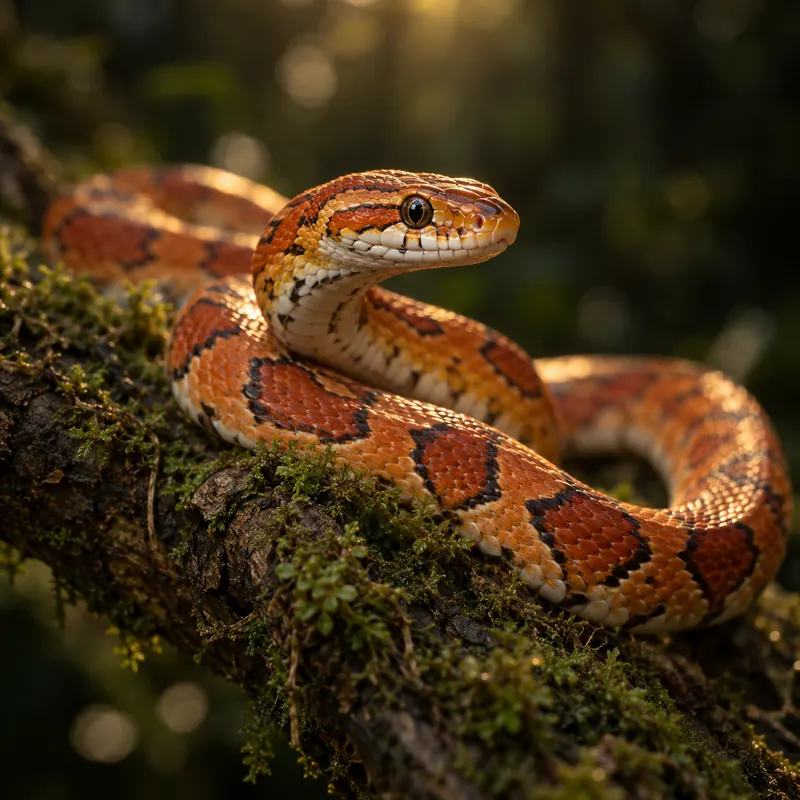
A corn snake needs less gear than most reptiles, but three items decide whether the setup is safe: an enclosure it cannot escape from, a heat source, and the thermostat that controls it. Spend your budget there first, then fill in the cheaper things.
Below is every item, in order of importance, with what to look for and a pick for each. US and UK stores stock different brands, so some sections have one pick per market. We have not tested these products ourselves: picks are based on the makers’ listings and on how well they match the husbandry guidance cited at the bottom of the page.
The short version
-
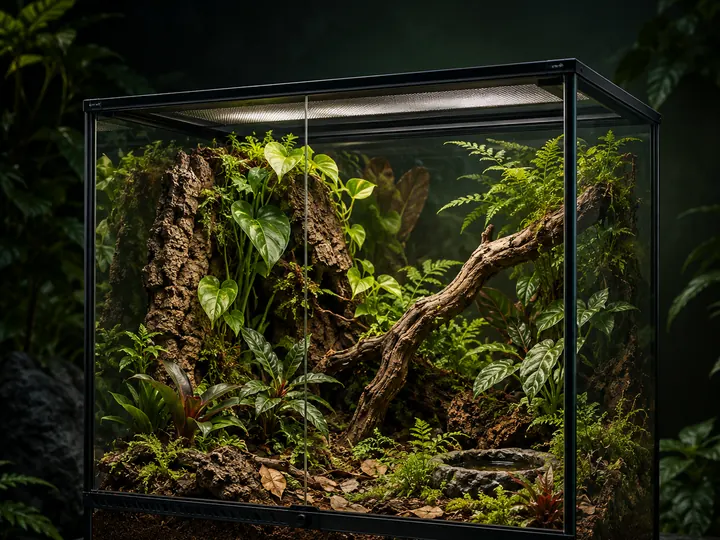 Enclosure Reptile Habitats 4x2x2 PVC Enclosure V3 (120 gallon) Amazon
 - Enclosure 4 x 2 x 2 ft (120 x 60 x 60 cm) lockable vivarium Amazon UK
-
 Basking heat Halogen basking lamp (Zoo Med Repti Tuff in the US, Arcadia in the UK) Amazon
 - Basking heat Halogen basking lamp (Zoo Med Repti Tuff in the US, Arcadia in the UK) Amazon UK
- Lamp thermostat Exo Terra Thermostat with Day and Night Timer (600 W) Amazon
- Lamp thermostat Habistat Dimming Thermostat, Classic Range (600 W) Amazon UK
- Heat mat thermostat Inkbird ITC-306T Heating Thermostat with Timer Amazon
- Heat mat thermostat Inkbird ITC-306T Heating Thermostat with Timer Amazon UK
-
 Thermometer and hygrometer ThermoPro (TempPro) TP50 Digital Thermometer and Hygrometer Amazon
 - Thermometer and hygrometer ThermoPro (TempPro) TP50 Digital Thermometer and Hygrometer Amazon UK
- Temp gun Etekcity Lasergrip 774 Infrared Thermometer Amazon
- Temp gun Etekcity Lasergrip 774 Infrared Thermometer Amazon UK
- Hides (buy two) Exo Terra Reptile Cave, Large Amazon
- Hides (buy two) Exo Terra Reptile Cave, Large Amazon UK
- Substrate Coconut fiber substrate (Zoo Med Eco Earth or Exo Terra Plantation Soil) Amazon
- Substrate Coconut fiber substrate (Zoo Med Eco Earth or Exo Terra Plantation Soil) Amazon UK
- Water bowl Exo Terra Water Dish, Extra Large Amazon
- Water bowl Exo Terra Water Dish, Extra Large Amazon UK
-
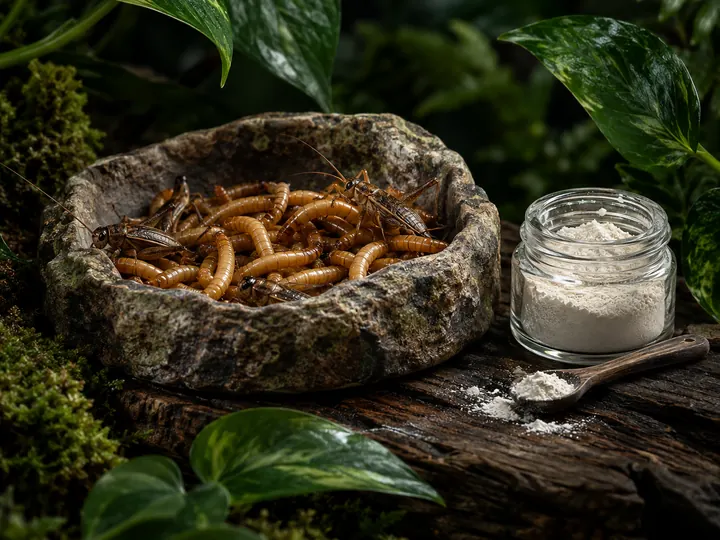 Feeding tongs Stainless Steel Feeding Tongs (about 10 to 12 in) Amazon
 - Feeding tongs Stainless Steel Feeding Tongs (about 10 to 12 in) Amazon UK
1. An escape-proof enclosure
Corn snakes are active, curious and very good at finding gaps. A loose lid or an unlocked sliding door is how most of them go missing. VCA asks for an escape-proof, well-ventilated cage with a locking top, and ReptiFiles warns that lids which do not lock securely are one of the things to avoid.
What to look for:
- Size. ReptiFiles and the Royal Veterinary College (RVC) both give 48 x 24 x 24 in (120 x 60 x 60 cm) as the minimum for a corn snake. The RSPCA’s minimum scales with the snake: at least as long as the snake, and one third of its length deep and tall. See the enclosure size guide for how they compare.
- Front-opening doors that lock. ReptiFiles prefers front-opening enclosures because they are secure and easy to reach into. If the doors do not lock, add a sliding-door lock before the snake moves in.
- No gaps. Check cable holes, vents and the gap between sliding doors. A young corn snake can fit through surprisingly small spaces.
- Material. PVC and wooden vivariums hold heat well and give the snake walls it cannot see through. The RVC calls wooden or fiberglass vivariums ideal. Glass tanks work at the right size, but ReptiFiles says to cover three sides and use at least four lid clamps, because glass aquariums are “not particularly secure.”
Best enclosure (US)
Reptile Habitats 4x2x2 PVC Enclosure V3 (120 gallon)
A 48 x 24 x 24 inch enclosure with PVC panels, front glass doors, an aluminum frame and a heavy-duty screen top. It matches the 4 x 2 x 2 ft (120 x 60 x 60 cm) minimum that ReptiFiles and the Royal Veterinary College give for an adult corn snake, and the screen top lets the heat lamp and UVB sit outside, out of reach.
- Size
- 48 x 24 x 24 in (about 120 x 60 x 60 cm)
- Walls
- PVC panels
- Front
- Glass doors
- Top
- Heavy-duty screen
- Weight
- About 25 lb (per the listing)
Best for
An adult corn snake, or a young one that will grow into it with extra hides and clutter.
Worth knowing
The listing does not describe a door lock. Corn snakes are escape artists, so fit a sliding-door lock if the doors do not lock, and check every vent and cable gap.
Best enclosure (UK)
4 x 2 x 2 ft (120 x 60 x 60 cm) lockable vivarium
Most UK corn snakes live in front-opening wooden or PVC vivariums with sliding glass doors. This link searches for the 120 x 60 x 60 cm size the Royal Veterinary College recommends as a minimum for a corn snake.
- Target size
- 120 x 60 x 60 cm (4 x 2 x 2 ft)
- Doors
- Front-opening, sliding glass with a lock
- Walls
- Wood (melamine) or PVC
Best for
UK keepers housing an adult, where 4 ft vivariums are the norm.
Worth knowing
Many "4ft" vivariums are only 45 to 50 cm deep and tall. Check all three measurements, make sure the doors take a lock, and plan a guard for any lamp inside.
2. Basking heat
Corn snakes need a warm end and a cool end. The RSPCA gives a basking zone of 82 to 86°F (28 to 30°C), and ReptiFiles aims for a basking surface of about 90°F (32°C). The lighting and heating guide explains the full gradient.
What to look for:
- Overhead heat that also gives light. ReptiFiles rates halogen bulbs as the best heat source for corn snakes. The RVC also describes a light-emitting spot bulb over the basking area, on in the day and off at night.
- A ceramic socket rated for the bulb. ReptiFiles warns against plastic sockets for heat lamps.
- A guard or an outside mount. VCA advises putting the heat source outside the cage behind a screen, and the RVC says heat sources should be guarded to prevent burns. Corn snakes climb, so a bare bulb inside the enclosure is a real burn risk.
Basking lamp
Halogen basking lamp (Zoo Med Repti Tuff in the US, Arcadia in the UK)
A halogen heat bulb for the basking spot. ReptiFiles rates halogen bulbs as the best heat source for corn snakes, because they warm the surface below the way the sun does. The US pick is a Zoo Med 75 W two pack; the UK link searches for the Arcadia Halogen Basking Spot.
- Type
- Halogen heat bulb
- US pick
- Zoo Med Repti Tuff, 75 W, 2 pack
- US rated life
- Up to 2,500 hours (per Zoo Med)
- UK fitting
- E27 screw
Best for
The daytime basking lamp: in a ceramic-socket dome on a screen top, or in a guarded ceramic holder inside a vivarium.
Worth knowing
Run it on a dimming thermostat. Pick the wattage that suits your enclosure and room: start low and step up only if the basking spot will not reach temperature.
Lamp dome (US, screen top)
Zoo Med Deluxe Porcelain Clamp Lamp, 8.5 in
A dome lamp with a porcelain (ceramic) socket that sits on a screen top and holds the basking bulb outside the enclosure, where the snake cannot touch it.
- Dome
- 8.5 in
- Socket
- Porcelain (ceramic)
- Listing
- UL listed
Best for
Holding the halogen lamp over a screen-topped PVC enclosure.
Worth knowing
Rest it flat on the screen rather than trusting the clamp, check its wattage rating against your bulb, and keep it on a thermostat.
Lamp guard (UK, lamp inside)
ProRep Heater Guard, Standard Round
A mesh guard that fits around a lamp inside a vivarium. The Royal Veterinary College says heat sources should be guarded to prevent burns, and corn snakes climb.
- Shape
- Round
- Size
- Standard
- Opening
- Easy-open front (per ProRep)
Best for
Any heat lamp or Deep Heat Projector mounted inside a UK wooden or PVC vivarium.
Worth knowing
Check that it fully encloses your bulb and fits your holder. Measure your lamp before ordering.
3. Thermostat
This is the one item you must never skip. A heater without a thermostat keeps getting hotter until something gives, and VCA lists burns from heat lamps and heaters among the common problems in pet snakes.
What to look for:
- A dimming thermostat for any bulb that gives light. ReptiFiles says on/off thermostats are not suitable for light-producing bulbs, because they make the lamp flash.
- An on/off or pulse thermostat for heat mats. ReptiFiles says a mat must always be on a thermostat, whatever the packaging claims.
- A long probe that reaches the basking spot or warm hide, and a night setting if you need gentle night heat.
Lamp thermostat (US)
Exo Terra Thermostat with Day and Night Timer (600 W)
A reptile thermostat with both dimming and pulse-proportional control, so it can run a halogen lamp smoothly or a heater that gives no light. Day and night targets are set separately.
- Max load
- 600 W
- Control modes
- Dimming and pulse proportional
- Set range
- 50 to 140°F (10 to 60°C)
- Timer
- Separate day and night settings
Best for
Controlling the basking lamp in a US setup.
Worth knowing
Fix the probe at the basking spot where the snake lies, and check it against a separate thermometer.
Lamp thermostat (UK)
Habistat Dimming Thermostat, Classic Range (600 W)
A UK-made dimming thermostat designed for heat bulbs. It turns the power down smoothly as the probe reaches the set temperature, instead of flicking the lamp on and off.
- Max load
- 600 W
- Control
- Dimming
- Use with
- Heat bulbs and heaters
Best for
Running a halogen basking lamp or Deep Heat Projector in a UK vivarium.
Worth knowing
Made for lamps and heaters. For a heat mat, use a mat or pulse thermostat.
Thermostat for a heat mat
Inkbird ITC-306T Heating Thermostat with Timer
A plug-in on/off thermostat with a probe, two heating outlets and separate day and night targets. On/off control suits heat mats, which ReptiFiles says must always run on a thermostat.
- Control
- On/off, heating only
- Outlets
- 2 (heating)
- Max load
- 10 A
- Timer
- Day and night set points
Best for
Keeping a heat mat under a hatchling's warm hide at a safe temperature.
Worth knowing
On/off control makes a light bulb flash, so use a dimming thermostat for lamps. Tape the probe where the snake rests so it cannot be moved.
4. Thermometers
You cannot feel what the snake feels through the glass. The RVC recommends a digital thermometer that records the highs and lows, and VCA suggests one at each end. Add an infrared thermometer to check surfaces, such as the basking spot, and to make sure thawed prey is warm right through.
Thermometer and hygrometer (buy two)
ThermoPro (TempPro) TP50 Digital Thermometer and Hygrometer
A small digital gauge that shows temperature and humidity and keeps the highs and lows, which the Royal Veterinary College recommends for checking reptile heat.
- Reads
- Temperature and humidity
- Memory
- Min and max records
Best for
One at each end of the enclosure. The UK listing is a 2 pack.
Worth knowing
It reads the air where it sits, not the surface under the lamp. Pair it with an infrared thermometer.
Infrared thermometer
Etekcity Lasergrip 774 Infrared Thermometer
A point-and-read thermometer that measures the surface temperature of whatever it is aimed at, such as the basking spot or the floor of the warm hide.
- Range
- -58 to 842°F (-50 to 450°C)
- Emissivity
- Adjustable
Best for
Checking the basking surface, and checking thawed prey is warmed through.
Worth knowing
It measures surfaces, not air. Never aim the laser at the snake's eyes, or yours.
5. Low-output UVB
Sources differ on UVB for corn snakes. VCA notes that vets disagree, and that UVB is not harmful and may help. The RSPCA asks for a low-output 2 to 7% tube covering one third to one half of the enclosure at the hot end, and the RVC says corn snakes “appear to benefit” from a low level of UVB.
If you add UVB, pick a low-output linear tube, mount it at the warm end, and leave plenty of shade. The RSPCA advises even lower UV for albino corn snakes.

Low-output UVB
Arcadia ShadeDweller Max UVB Kit (2.5%, 14 W)
A low-output UVB and full-spectrum lamp kit made for shade-dwelling and partly basking snakes. The RSPCA asks for a low-output 2 to 7% UVB tube for corn snakes, and the Royal Veterinary College recommends a low level of UV.
- UVB
- 2.5%
- Power
- 14 W
- Length
- About 22 to 24 in (55 to 60 cm)
Best for
Gentle UVB and a bright day over the warm half of a 4 ft enclosure, including albino morphs, which the RSPCA says need lower UV.
Worth knowing
Mount it at the warm end so the snake can move into shade. Follow Arcadia's distance chart, and replace the lamp on schedule.
6. Substrate for burrowing
Corn snakes like to dig and push under things. ReptiFiles lists coconut fiber and soil-based mixes among the best substrates and suggests a layer at least 3 in (8 cm) deep. The RSPCA suggests a mix of about 60% soil, 30% sand and 10% leaves.
Avoid cedar, which VCA says is toxic to reptiles, and pine. PetMD warns that both have irritating oils. ReptiFiles also cautions against bark and wood chips, which can cause blockages if swallowed, though the RVC lists orchid bark and cypress mulch among usable options. Whatever you use, the RVC advises not feeding the snake directly on loose substrate.
Substrate
Coconut fiber substrate (Zoo Med Eco Earth or Exo Terra Plantation Soil)
Compressed coconut fiber that expands in water into a loose, soil-like bedding. ReptiFiles lists coconut fiber among the best corn snake substrates: it is cheap, holds humidity and lets the snake burrow.
- Material
- Coconut fiber
- US pack
- 1 compressed brick
- UK pack
- Brick that makes 8.8 L
Best for
A burrowing layer at least 3 in (8 cm) deep, as ReptiFiles advises. A 4 ft enclosure needs several bricks.
Worth knowing
It turns dusty if it dries out completely, so keep it slightly damp. Feed on a plate or with tongs so the snake does not swallow it.
7. Hides
At least two, one at each end. ReptiFiles and the RVC both ask for a warm hide and a cool hide, so the snake never has to pick between feeling safe and being the right temperature. ReptiFiles adds an optional humid hide on the warm side, packed with damp sphagnum moss, to help with shedding.
Hides (buy two)
Exo Terra Reptile Cave, Large
A low, natural-looking cave that Exo Terra describes as very stable, so it is hard for a snake to tip or push aside. It lifts out for easy cleaning.
- Size
- About 8.3 x 7.5 x 3.2 in (21 x 19 x 8 cm), per the US listing
- Listed size
- Large
Best for
A hide at each end of the enclosure. Buy two, so the snake never has to choose between feeling safe and being the right temperature.
Worth knowing
A hatchling feels safer in a smaller, tighter hide. Move up to this size as the snake grows.
8. Climbing and clutter
This is where corn snakes differ from ball pythons. The RVC notes that some corn snakes “love to climb,” and ReptiFiles suggests climbing branches to use the height of the enclosure. Add sturdy branches, cork bark and plenty of plants so the snake can move around under cover.
- Fix branches so they cannot fall. VCA asks for natural branches that are pest-free, pesticide-free and anchored.
- Do not use pine, fir or cedar wood, per ReptiFiles.
- Artificial plants are fine if they have no sharp points or exposed wires.
Cork bark for cover and climbing
Zoo Med Natural Cork Bark Round, Large
A hollow tube of natural cork bark. It works as a hide, a tunnel to push through, or, laid on a slope, something to climb. Zoo Med lists it as safe for all reptiles.
- Size
- About 9.4 x 4.7 x 3 in (24 x 12 x 8 cm), per the listing
- Material
- Natural cork bark
Best for
Adding cover and climbing to the middle of the enclosure, where corn snakes like to explore.
Worth knowing
Bed it into the substrate or wedge it so it cannot roll. Natural pieces vary in size.
9. Water bowl
A large, heavy bowl that is hard to tip. The RVC asks for one big enough for the snake to submerge in, with the water changed daily. ReptiFiles notes that corn snakes soak, especially before a shed.
Water bowl
Exo Terra Water Dish, Extra Large
A heavy resin water dish with a smooth surface and built-in steps, made to be hard to tip. It is big enough for a corn snake to drink and soak in.
- Size
- Extra large
- Material
- Food-grade resin (per Exo Terra)
- Feature
- Steps to climb out
Best for
The main water bowl. ReptiFiles and VCA both ask for a large, heavy bowl that will not tip.
Worth knowing
Snakes often soil their water. VCA advises cleaning the bowl daily, and the RSPCA says to change the water at least daily.
10. Feeding tools
Feeding tongs keep your fingers out of the strike. PetMD advises offering thawed prey with tongs. A kitchen scale that reads in grams helps too: ReptiFiles suggests keeping meals near 10% of the snake’s body weight and weighing the snake regularly.
Feeding tongs
Stainless Steel Feeding Tongs (about 10 to 12 in)
Long stainless tongs for offering thawed prey, so the snake strikes the mouse and not your hand. PetMD advises offering food with tongs.
- Material
- Stainless steel
- Length
- About 10 to 12 in (25 to 30 cm)
Best for
Every feed. The US pick is a straight and curved pair, 10.6 in long.
Worth knowing
Let go as soon as the snake strikes and coils. Wash your hands after touching prey so your fingers do not smell like food.
11. Smaller extras
- A plug-in timer for the lights. The RSPCA and RVC both suggest about 12 hours of light a day.
- A heat mat (optional). Useful under a hatchling’s warm hide. The RSPCA describes a heat mat at the hot end for hatchlings, set to 86°F (30°C) on a thermostat. ReptiFiles says mats should be a secondary heat source, not the main one.
- Sphagnum moss for the humid hide.
- A reptile-safe disinfectant. The RVC suggests spot cleaning as soon as waste appears and a full clean once a month. PetMD and VCA suggest a weekly clean.
- A secure travel box with air holes, for vet visits.
Buying for a hatchling
Hatchlings are only about 10 to 15 in (25 to 38 cm) long, according to ReptiFiles, so a 4 ft enclosure can feel huge to them. ReptiFiles gives two options: put the youngster straight into the adult enclosure with plenty of tight hiding places, or use a smaller front-opening “grow-out” enclosure for the first year. The RVC says corn snakes reach about 2 ft (60 cm) within their first 12 months, so a grow-out setup does not last long.
Either way, a hatchling needs smaller hides it can press against, extra plant cover, and gaps checked even more carefully than for an adult. ReptiFiles also says hatchlings under a year old should be kept warm at night, which is where a heat mat on a thermostat earns its place.
A worked example: how the heat fits together
For a typical adult in a 4 x 2 x 2 ft PVC enclosure with a screen top:
- A halogen bulb in a ceramic dome sits on the screen over one end.
- A flat rock, cork round or low branch sits under it as the basking spot, with the warm hide close by.
- The thermostat probe is fixed at the basking spot, at the height where the snake lies.
- The thermostat is set so the basking surface reads about 86 to 90°F (30 to 32°C), checked with the infrared thermometer.
- A digital thermometer at the far end confirms the cool side stays in range: 68 to 75°F (20 to 24°C) per the RSPCA, or 75 to 82°F (24 to 27°C) per ReptiFiles.
- The light and heat go off at night on a timer.
If the basking spot will not reach temperature, try a higher-wattage bulb. If it overshoots, the thermostat should hold it down. If it cannot, the bulb is too strong for the space.
Starter kits vs buying separately
Corn snake starter kits are common. Check each part before you buy one. Many come with a small glass tank, a heat mat without a thermostat, or a single hide, and each of those falls short of the guidance on this page. Buying the core items separately usually gives a safer setup.
Skip these
- Heat rocks. VCA calls them dangerous and ineffective, and ReptiFiles says they cause severe burns.
- Any heater without a thermostat, including heat mats sold as “ready to use.”
- Colored night bulbs. ReptiFiles says red, blue and other “night” bulbs may disrupt the day and night cycle. If a hatchling needs night heat, use a heater that gives no light.
- Cedar and pine shavings, for the reasons above.
- Sticky tape to seal a lid. ReptiFiles warns that snakes can get stuck to it. Use proper clamps or locks.
- A second snake for company. The RSPCA and PetMD both say to keep corn snakes alone.
Where to start
If budget is tight, buy in this order: enclosure, heat lamp, thermostat, thermometers, hides, substrate, water bowl, then the rest. The setup checklist shows how to put it all together and test it before the snake arrives.
Lock it, heat it, control it. Get those three right and a corn snake is one of the easiest reptiles there is to keep well.