
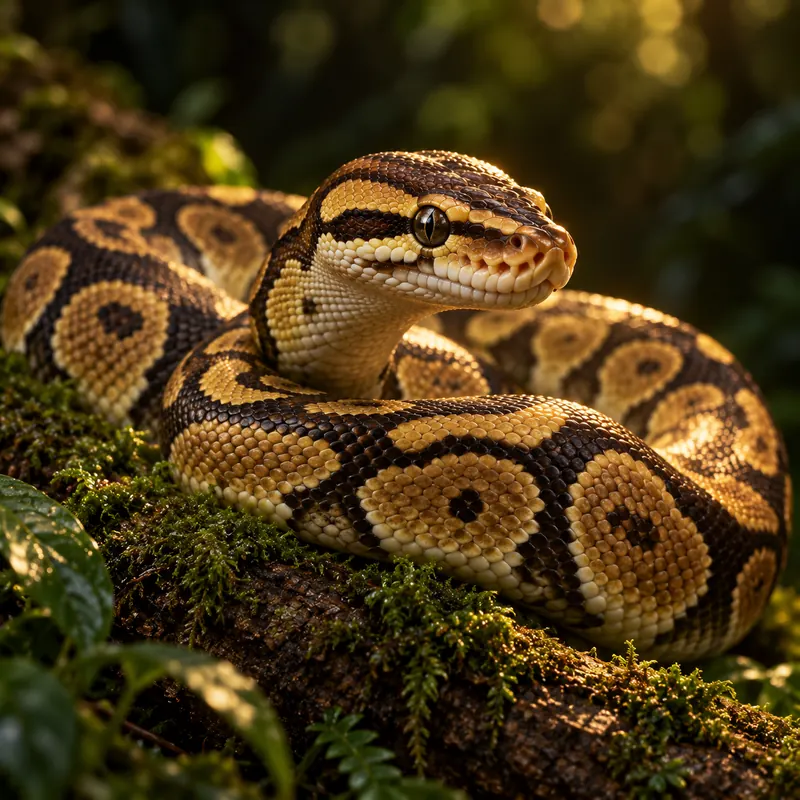
A ball python setup is a 4 x 2 x 2 ft enclosure that holds humidity, an overhead heat lamp on a dimming thermostat, two thermometers, a temp gun, two snug hides, a deep layer of damp substrate, a heavy water bowl and a pair of feeding tongs, plus an optional low-output UVB tube. The snake itself is usually the small part of the bill. The enclosure alone tends to cost more than everything else combined, and the whole setup should be running and checked for a few days before the snake comes home.
Below are three complete builds (budget, mid-range and premium), each totaled from today’s Amazon prices, followed by where cutting costs is risky and where it is fine. Picks are based on the care guidance cited at the bottom of this page and on the makers’ own listings; we have not tested them ourselves.
The short version
-
 Enclosure Reptile Habitats 4x2x2 PVC Enclosure V3 (120 gallon) $349.00iPrice as of Oct 16, 8:01 AM UTC. Product prices and availability are accurate as of the date/time indicated and are subject to change. Any price and availability information displayed on Amazon at the time of purchase will apply to the purchase of this product. Amazon
 -
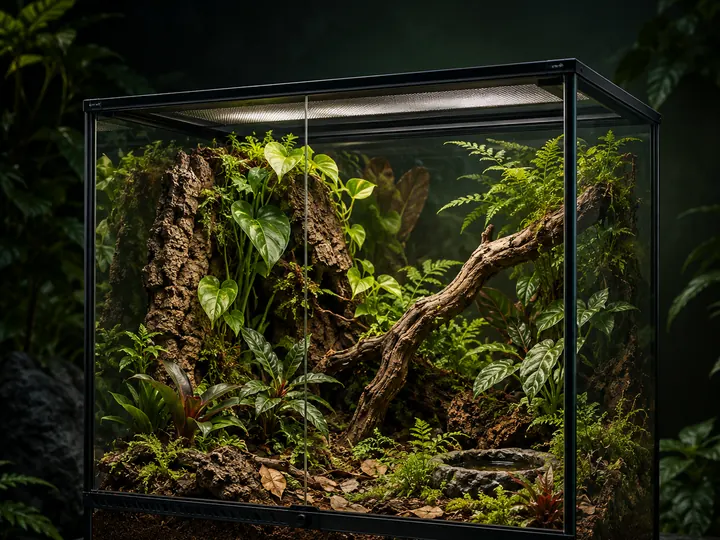 Enclosure 4 x 2 x 2 ft (120 x 60 x 60 cm) front-opening vivarium Amazon UK
 -
 Heat lamp Arcadia Deep Heat Projector Amazon
 - Heat lamp Arcadia Deep Heat Projector Amazon UK
-
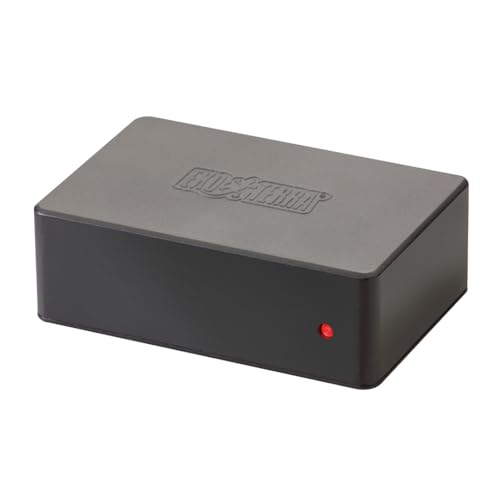 Dimming thermostat Exo Terra Dimming and Pulse Proportional Thermostat $82.99iPrice as of Oct 16, 8:01 AM UTC. Product prices and availability are accurate as of the date/time indicated and are subject to change. Any price and availability information displayed on Amazon at the time of purchase will apply to the purchase of this product. Amazon
 - Dimming thermostat Habistat Dimming Thermostat, Classic Range (600 W) Amazon UK
-
 Lamp dome or guard Zoo Med Deluxe Porcelain Clamp Lamp, 8.5 in $23.98iPrice as of Oct 16, 8:01 AM UTC. Product prices and availability are accurate as of the date/time indicated and are subject to change. Any price and availability information displayed on Amazon at the time of purchase will apply to the purchase of this product. Amazon
 - Lamp dome or guard ProRep Heater Guard, Standard Round Amazon UK
-
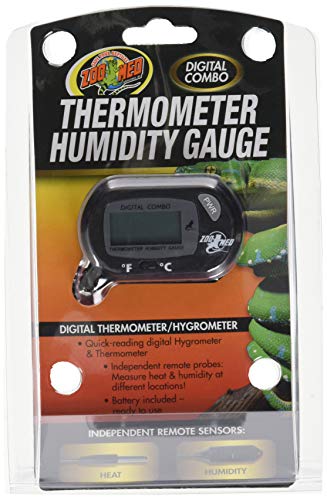
 Thermometer and hygrometer (buy two) Zoo Med Digital Thermometer and Humidity Gauge (TH-31) $12.99iPrice as of Oct 16, 8:01 AM UTC. Product prices and availability are accurate as of the date/time indicated and are subject to change. Any price and availability information displayed on Amazon at the time of purchase will apply to the purchase of this product. Amazon
 - Thermometer and hygrometer (buy two) Zoo Med Digital Thermometer and Humidity Gauge (TH-31) Amazon UK
-
 Low-output UVB Arcadia ShadeDweller Max ProT5 UVB Kit (2.5%, 14 W) Amazon
 - Low-output UVB Arcadia ShadeDweller Max ProT5 UVB Kit (2.5%, 14 W) Amazon UK
-
 Water bowl Exo Terra Water Dish, Extra Large $28.99iPrice as of Oct 16, 8:01 AM UTC. Product prices and availability are accurate as of the date/time indicated and are subject to change. Any price and availability information displayed on Amazon at the time of purchase will apply to the purchase of this product. Amazon
 - Water bowl Exo Terra Water Dish, Extra Large Amazon UK
Prices from Amazon as of Oct 16, 8:01 AM UTC and may change. Details
The three builds
Everything the animal needs, nothing extra.
- Enclosure Reptile Habitats 4x2x2 PVC Enclosure V3 (120 gallon) 4 x 2 x 2 ft for an adult. PVC or sealed wood holds heat and humidity best. $349.00 Buy
-
 UVB lighting (optional) Zoo Med ReptiSun T5 HO Terrarium Hood with 5.0 UVB Lamp, 24 in Optional, as sources differ. If you add it, use a linear tube over the warm half. $80.94 Buy
 -
 Heat lamp Zoo Med Repti Tuff Splashproof Halogen Lamp, 75W (2 pack) Halogen gives daytime heat and light. A Deep Heat Projector gives no light, so it can also run at night. $29.96 Buy
 - Lamp dome or guard Zoo Med Deluxe Porcelain Clamp Lamp, 8.5 in A ceramic dome on a screen top, or a ceramic holder and a guard inside a vivarium. $23.98 Buy
-
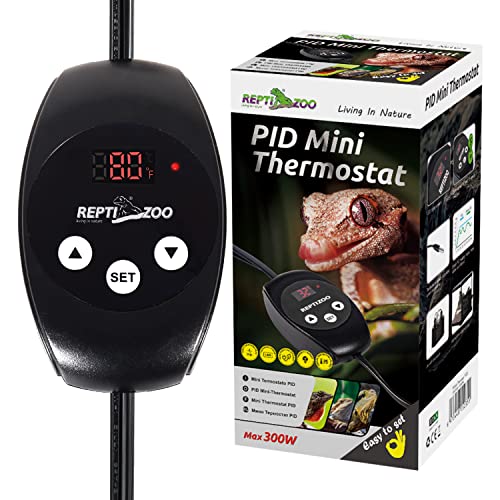 Thermostat REPTIZOO Dimming Thermostat with Memory Function Never skip it. Use a dimming thermostat for any heat lamp. $27.99 Buy
 -
 Thermometer and hygrometer ThermoPro TP50 Digital Thermometer and Hygrometer Buy two, one for each end. $10.99 Buy
 -
 Infrared thermometer Etekcity Lasergrip 774 Infrared Thermometer For the surface of the warm hide and for thawed prey. $18.99 Buy
 -
 Hides Exo Terra Reptile Cave, Large Buy two the same, one at each end. $20.78 Buy
 -
 Substrate Zoo Med Eco Earth Coconut Fiber Substrate (3 bricks) A 4 x 2 ft floor at 4 in deep takes several packs. $35.19 Buy
 -
 Humid hide moss New Zealand Sphagnum Moss Damp moss in one hide helps sheds come off in one piece. $5.79 Buy
 -
 Water bowl Zoo Med Repti Rock Water Dish, X-Large Large and heavy enough to soak in. $18.11 Buy
 -
 Feeding tongs Stainless Steel Feeding Tongs (about 10 to 12 in) $12.61 Buy
 -
 Gram scale (optional) Digital Scale That Reads in Grams For weigh-ins and sizing prey. Buy
Sturdier gear and easier day-to-day care.
- Enclosure Reptile Habitats 4x2x2 PVC Enclosure V3 (120 gallon) 4 x 2 x 2 ft for an adult. PVC or sealed wood holds heat and humidity best. $349.00 Buy
-
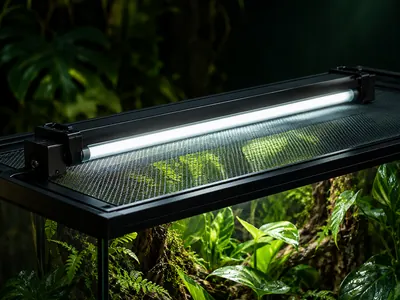 UVB lighting (optional) Arcadia ShadeDweller Max ProT5 UVB Kit (2.5%, 14 W) Optional, as sources differ. If you add it, use a linear tube over the warm half. Buy
 -
 Heat lamp Arcadia Deep Heat Projector, 50W Halogen gives daytime heat and light. A Deep Heat Projector gives no light, so it can also run at night. $30.99 Buy
 - Lamp dome or guard Zoo Med Deluxe Porcelain Clamp Lamp, 8.5 in A ceramic dome on a screen top, or a ceramic holder and a guard inside a vivarium. $23.98 Buy
- Thermostat Exo Terra Dimming and Pulse Proportional Thermostat Never skip it. Use a dimming thermostat for any heat lamp. $82.99 Buy
- Thermometer and hygrometer Zoo Med Digital Thermometer and Humidity Gauge (TH-31) Buy two, one for each end. $12.99 Buy
- Infrared thermometer Etekcity Lasergrip 774 Infrared Thermometer For the surface of the warm hide and for thawed prey. $18.99 Buy
- Hides Exo Terra Reptile Cave, Large Buy two the same, one at each end. $20.78 Buy
- Substrate Zoo Med Eco Earth Coconut Fiber Substrate (3 bricks) A 4 x 2 ft floor at 4 in deep takes several packs. $35.19 Buy
- Humid hide moss New Zealand Sphagnum Moss Damp moss in one hide helps sheds come off in one piece. $5.79 Buy
- Water bowl Exo Terra Water Dish, Extra Large Large and heavy enough to soak in. $28.99 Buy
- Feeding tongs Stainless Steel Feeding Tongs (about 10 to 12 in) $12.61 Buy
- Gram scale (optional) Digital Scale That Reads in Grams For weigh-ins and sizing prey. Buy
The best-made option for each job.
-
 Enclosure 6 x 2 x 2 ft enclosure (Reptile Habitats 180 gallon PVC in the US, a 6ft vivarium in the UK) 4 x 2 x 2 ft for an adult. PVC or sealed wood holds heat and humidity best. $516.35 Buy
 - UVB lighting (optional) Arcadia ShadeDweller Max ProT5 UVB Kit (2.5%, 14 W) Optional, as sources differ. If you add it, use a linear tube over the warm half. Buy
- Heat lamp Arcadia Deep Heat Projector, 50W Halogen gives daytime heat and light. A Deep Heat Projector gives no light, so it can also run at night. $30.99 Buy
- Lamp dome or guard Zoo Med Deluxe Porcelain Clamp Lamp, 8.5 in A ceramic dome on a screen top, or a ceramic holder and a guard inside a vivarium. $23.98 Buy
- Thermostat Exo Terra Dimming and Pulse Proportional Thermostat Never skip it. Use a dimming thermostat for any heat lamp. $82.99 Buy
- Thermometer and hygrometer Zoo Med Digital Thermometer and Humidity Gauge (TH-31) Buy two, one for each end. $12.99 Buy
- Infrared thermometer Etekcity Lasergrip 774 Infrared Thermometer For the surface of the warm hide and for thawed prey. $18.99 Buy
- Hides Exo Terra Reptile Cave, Large Buy two the same, one at each end. $20.78 Buy
- Substrate Zoo Med Eco Earth Coconut Fiber Substrate (3 bricks) A 4 x 2 ft floor at 4 in deep takes several packs. $35.19 Buy
- Humid hide moss New Zealand Sphagnum Moss Damp moss in one hide helps sheds come off in one piece. $5.79 Buy
- Water bowl Exo Terra Water Dish, Extra Large Large and heavy enough to soak in. $28.99 Buy
- Feeding tongs Stainless Steel Feeding Tongs (about 10 to 12 in) $12.61 Buy
- Gram scale (optional) Digital Scale That Reads in Grams For weigh-ins and sizing prey. Buy
Everything the animal needs, nothing extra.
-
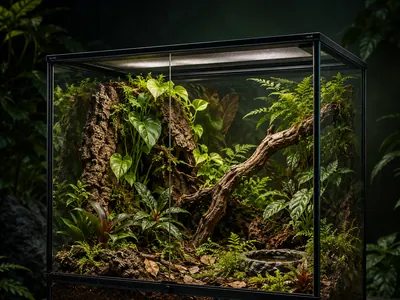 Enclosure 4 x 2 x 2 ft (120 x 60 x 60 cm) front-opening vivarium 4 x 2 x 2 ft for an adult. PVC or sealed wood holds heat and humidity best. Buy
 - UVB lighting (optional) Arcadia ShadeDweller Max ProT5 UVB Kit (2.5%, 14 W) Optional, as sources differ. If you add it, use a linear tube over the warm half. Buy
-
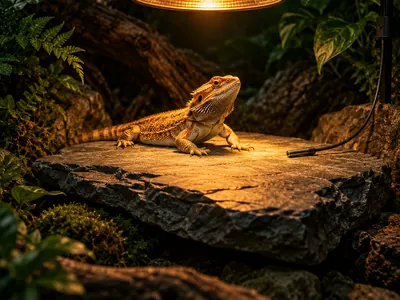 Heat lamp Arcadia Deep Heat Projector, 50W Halogen gives daytime heat and light. A Deep Heat Projector gives no light, so it can also run at night. Buy
 - Lamp dome or guard ProRep Heater Guard, Standard Round A ceramic dome on a screen top, or a ceramic holder and a guard inside a vivarium. Buy
- Thermostat Habistat Dimming Thermostat, Classic Range (600 W) Never skip it. Use a dimming thermostat for any heat lamp. Buy
-
 Thermometer and hygrometer ThermoPro TP50 Digital Thermometer and Hygrometer Buy two, one for each end. Buy
 - Infrared thermometer Etekcity Lasergrip 774 Infrared Thermometer For the surface of the warm hide and for thawed prey. Buy
- Hides Exo Terra Reptile Cave, Large Buy two the same, one at each end. Buy
- Substrate Exo Terra Plantation Soil, 8.8 L A 4 x 2 ft floor at 4 in deep takes several packs. Buy
- Humid hide moss New Zealand Sphagnum Moss Damp moss in one hide helps sheds come off in one piece. Buy
- Water bowl Exo Terra Water Dish, Extra Large Large and heavy enough to soak in. Buy
- Feeding tongs Stainless Steel Feeding Tongs (about 10 to 12 in) Buy
- Gram scale (optional) Digital Scale That Reads in Grams For weigh-ins and sizing prey. Buy
Sturdier gear and easier day-to-day care.
- Enclosure 4 x 2 x 2 ft (120 x 60 x 60 cm) front-opening vivarium 4 x 2 x 2 ft for an adult. PVC or sealed wood holds heat and humidity best. Buy
- UVB lighting (optional) Arcadia ShadeDweller Max ProT5 UVB Kit (2.5%, 14 W) Optional, as sources differ. If you add it, use a linear tube over the warm half. Buy
- Heat lamp Arcadia Deep Heat Projector, 50W Halogen gives daytime heat and light. A Deep Heat Projector gives no light, so it can also run at night. Buy
- Lamp dome or guard ProRep Heater Guard, Standard Round A ceramic dome on a screen top, or a ceramic holder and a guard inside a vivarium. Buy
- Thermostat Habistat Dimming Thermostat, Classic Range (600 W) Never skip it. Use a dimming thermostat for any heat lamp. Buy
- Thermometer and hygrometer Zoo Med Digital Thermometer and Humidity Gauge (TH-31) Buy two, one for each end. Buy
- Infrared thermometer Etekcity Lasergrip 774 Infrared Thermometer For the surface of the warm hide and for thawed prey. Buy
- Hides Exo Terra Reptile Cave, Large Buy two the same, one at each end. Buy
- Substrate Exo Terra Plantation Soil, 8.8 L A 4 x 2 ft floor at 4 in deep takes several packs. Buy
- Humid hide moss New Zealand Sphagnum Moss Damp moss in one hide helps sheds come off in one piece. Buy
- Water bowl Exo Terra Water Dish, Extra Large Large and heavy enough to soak in. Buy
- Feeding tongs Stainless Steel Feeding Tongs (about 10 to 12 in) Buy
- Gram scale (optional) Digital Scale That Reads in Grams For weigh-ins and sizing prey. Buy
The best-made option for each job.
- Enclosure 6 x 2 x 2 ft enclosure (Reptile Habitats 180 gallon PVC in the US, a 6ft vivarium in the UK) 4 x 2 x 2 ft for an adult. PVC or sealed wood holds heat and humidity best. Buy
- UVB lighting (optional) Arcadia ShadeDweller Max ProT5 UVB Kit (2.5%, 14 W) Optional, as sources differ. If you add it, use a linear tube over the warm half. Buy
- Heat lamp Arcadia Deep Heat Projector, 50W Halogen gives daytime heat and light. A Deep Heat Projector gives no light, so it can also run at night. Buy
- Lamp dome or guard ProRep Heater Guard, Standard Round A ceramic dome on a screen top, or a ceramic holder and a guard inside a vivarium. Buy
- Thermostat Habistat Dimming Thermostat, Classic Range (600 W) Never skip it. Use a dimming thermostat for any heat lamp. Buy
- Thermometer and hygrometer Zoo Med Digital Thermometer and Humidity Gauge (TH-31) Buy two, one for each end. Buy
- Infrared thermometer Etekcity Lasergrip 774 Infrared Thermometer For the surface of the warm hide and for thawed prey. Buy
- Hides Exo Terra Reptile Cave, Large Buy two the same, one at each end. Buy
- Substrate Exo Terra Plantation Soil, 8.8 L A 4 x 2 ft floor at 4 in deep takes several packs. Buy
- Humid hide moss New Zealand Sphagnum Moss Damp moss in one hide helps sheds come off in one piece. Buy
- Water bowl Exo Terra Water Dish, Extra Large Large and heavy enough to soak in. Buy
- Feeding tongs Stainless Steel Feeding Tongs (about 10 to 12 in) Buy
- Gram scale (optional) Digital Scale That Reads in Grams For weigh-ins and sizing prey. Buy
Totals add up the essential items at today's Amazon prices; optional items are listed but not counted. Prices change, so treat totals as a guide.
Prices from Amazon as of Oct 16, 8:01 AM UTC and may change. Details
Each column is a full setup built to the same care standards: every enclosure is 4 x 2 x 2 ft, every heat lamp runs on a dimming thermostat, and the UVB option is a linear tube, never a coil. What changes is build quality and convenience. The totals add up the essential items at today’s Amazon prices for your store. UVB and the gram scale are optional, so they are listed but not counted. Where an item has no worthwhile cheaper or pricier version, all three columns show the same product.
Two items say “buy two”: the thermometer and the hide. The totals count one of each, so add a second of each before you set a budget. Substrate also needs more than one pack to fill a 4 ft floor. If a total says some items are not priced, that listing had no live price today. Want a list built around what you already own? Try the Setup Assistant.
Where not to save
Heat control
A heater with no thermostat keeps getting hotter until something fails. VCA lists burns among the common problems in pet snakes and calls heat rocks dangerous. ReptiFiles warns that uncontrolled heaters are a common cause of burns. A lamp that gives off light needs a dimming thermostat, because an on/off unit makes the bulb flash. The RSPCA asks for a guarded heat lamp on a thermostat, and advises checking both ends of the enclosure daily because thermostats can be inaccurate.
That is why even the budget build has a dimming thermostat. It uses a cheaper unit with the same kind of control, not a cheaper kind of control. The mid-range build moves up to a thermostat with both dimming and pulse modes. In the UK every build uses the Habistat, a dimming thermostat made for heat lamps.
Budget dimming thermostat (US)
REPTIZOO Dimming Thermostat with Memory Function
A low-cost dimming thermostat with PID control and a probe. Dimming lowers the power to a heat lamp smoothly, so a halogen bulb does not flash on and off, and the memory keeps your settings after a power cut.
- Control
- Dimming, PID
- Use with
- Heat lamps and heaters
- Extras
- Settings memory
Best for
Running a halogen heat lamp or Deep Heat Projector on a tight budget in a US setup.
Worth knowing
Check the maximum wattage on the listing against your lamp before you buy. Fix the probe at the warm hide and confirm the reading with a separate thermometer.
Dimming thermostat (UK)
Habistat Dimming Thermostat, Classic Range (600 W)
A UK-made dimming thermostat designed for heat lamps and heaters. It smoothly turns the power down as the probe reaches the set temperature, instead of switching the lamp fully on and off.
- Max load
- 600 W
- Min load
- 40 W
- Control
- Dimming
- Use with
- Heat lamps, ceramic and infrared heaters
Best for
Running a heat lamp or Deep Heat Projector in a UK vivarium.
Worth knowing
It has a minimum load, so very low-wattage heaters may not dim correctly. Not intended for heat mats: use a mat stat or pulse stat for those.
The budget build pairs that thermostat with a halogen bulb, which ReptiFiles rates highly for daytime heat. Halogen gives light, so it goes off at night. The mid-range Deep Heat Projector gives no visible light and can run around the clock, which helps if your room drops below about 70°F (21°C) at night. Never fill that gap with a colored “night” bulb.
Enclosure size
ReptiFiles recommends 4 x 2 x 2 ft (120 x 60 x 60 cm) for an adult, and the site’s enclosure size guide explains how that compares with the RSPCA’s minimum. Buying a smaller tank to save money now usually means buying a second one later, because a ball python reaches adult size within a few years and can live for decades. Every build here starts at the adult size.
Material matters as much as size. ReptiFiles notes that glass makes heat and humidity harder to hold, while PVC and sealed wood keep both steady. In the UK, front-opening vivariums are the norm; check all three measurements, as many “4 ft” models are shallower than 60 cm.
UVB, if you add it
Sources differ on whether ball pythons need UVB. The MSD Veterinary Manual lists no special lighting requirement but still recommends broad-spectrum light, and the RSPCA asks for a low-output 2 to 7% tube over one third to one half of the enclosure at the warm end. That is why UVB is optional in the totals. If you buy it, do not save by picking a coil bulb or a strong desert tube. Choose a linear tube in that range, mount it over the warm half and leave plenty of shade.
Lower-cost UVB option (US)
Zoo Med ReptiSun T5 HO Terrarium Hood with 5.0 UVB Lamp, 24 in
A 24 inch Zoo Med T5 HO hood fitted with a ReptiSun 5.0 UVB tube, sold as a bundle. A 5% tube sits inside the 2 to 7% range the RSPCA gives for royal pythons, and a 24 inch fixture covers about half the length of a 4 ft enclosure.
- UVB
- 5.0 (5%)
- Tube
- T5 HO
- Fixture length
- 24 in
Best for
A lower-cost way to add UVB over the warm half of a 4 x 2 x 2 ft US enclosure.
Worth knowing
A T5 HO tube is stronger than a basic T8, so mount it above the screen, leave plenty of shade and check the UV index at the basking spot. Albino and other light-sensitive morphs need the low end. Replace the tube on schedule.
Low-output UVB
Arcadia ShadeDweller Max ProT5 UVB Kit (2.5%, 14 W)
A low-output T5 UVB and full-spectrum lamp in a fitting with a built-in reflector, made for shade-dwelling and partly basking snakes. Low-output tubes are what the RSPCA and ReptiFiles describe for royal pythons.
- UVB
- 2.5%
- Power
- 14 W
- Length
- About 22 to 24 in (55 cm)
- Type
- T5 with reflector
Best for
Giving a ball python gentle UVB and a bright day across about half of a 4 ft enclosure.
Worth knowing
Mount it on the warm side so the snake can move into shade. Check the distance against a UV meter or the maker's chart, and replace the tube on schedule.
Where saving is fine
Hides and decor
A ball python cares that its hide fits snugly, not what it costs. ReptiFiles says they prefer close-fitting hides, so two plain caves of the same model, one at each end, do the job. Cover matters more than ornament: ReptiFiles suggests cluttering the enclosure with plants and cover, plus a sturdy branch or two. Artificial plants and cork bark are fine, as long as everything is stable and secured.
Hides (buy two)
Exo Terra Reptile Cave, Large
A low, natural-looking cave that Exo Terra describes as very stable, so larger animals do not easily tip it over. It is easy to lift out and wash.
- Size
- About 26 x 19 x 10 cm (10.2 x 7.5 x 3.9 in)
- Listed size
- Large
Best for
A snug hide at each end of the enclosure. Buy two the same, so the snake never has to choose between safety and the right temperature.
Worth knowing
Ball pythons want a hide that fits closely. A very large adult may need a bigger hide; a small juvenile may feel safer in a smaller one.

Cover and climbing
Zoo Med Natural Cork Bark Round, Large
A hollow tube of natural cork bark. It works as a hide, a tunnel to push through, or, laid on a slope, something to climb. Zoo Med lists it as safe for all reptiles.
- Size
- About 9.4 x 4.7 x 3 in (24 x 12 x 8 cm), per the listing
- Material
- Natural cork bark
Best for
Adding cover and climbing to the middle of the enclosure, where corn snakes like to explore.
Worth knowing
Bed it into the substrate or wedge it so it cannot roll. Natural pieces vary in size.
Substrate
Plain coconut fiber is one of the cheapest options and holds humidity well. ReptiFiles rates coconut husk chips, sphagnum and soil-based mixes a little higher and loose coconut fiber as acceptable, so the budget choice is still a sound one. What matters is depth and dampness: ReptiFiles suggests at least 4 in (10 cm), kept damp but not soggy. Avoid cedar, pine and aspen whatever they cost.
Substrate (US)
Zoo Med Eco Earth Coconut Fiber Substrate (3 bricks)
Compressed coconut fiber bricks that expand in water into a loose, soil-like substrate that holds moisture well.
- Pack
- 3 compressed bricks
- Each brick makes
- About 7 to 8 liters
- Material
- Coconut fiber
Best for
A humidity-holding base layer, alone or mixed with coconut husk chips.
Worth knowing
ReptiFiles rates it as acceptable rather than ideal because fine fibers can stick in heat pits. Keep it damp, not soggy.
Substrate (UK)
Exo Terra Plantation Soil, 8.8 L
A ground coconut husk substrate from Exo Terra that holds moisture and can be dug into.
- Volume
- 8.8 L per pack
- Material
- Coconut husk fiber
Best for
A humidity-holding substrate in a UK vivarium.
Worth knowing
Several listings exist (loose bags and compressed bricks). Check the volume, and keep it damp rather than wet.
Gauges and small tools
A simple digital thermometer and hygrometer reads the air just as usefully as a pricier one, provided you have one at each end and back it up with an infrared thermometer for surfaces. Feeding tongs and a water bowl do not need to be fancy; the bowl just needs to be heavy and large enough to soak in.
Ongoing costs
The setup is a one-off; these keep coming:
- Food. Frozen-thawed rodents sized to the snake. Young snakes eat every 5 to 7 days and adults every 7 to 14, according to the care sources behind the diet guide, so food is the main recurring cost.
- Supplements. The RSPCA notes that supplements are generally unnecessary for a snake fed good-quality whole prey, so there is no regular supplement cost.
- UVB tube. If you use one, ReptiFiles advises replacing it every 12 months, even if it still lights up.
- Heat bulbs. Halogen bulbs wear out, which is one reason the budget pick comes as a two-pack. Keep a spare so the warm side never goes cold.
- Substrate and moss. Spot clean as needed. ReptiFiles suggests a full substrate change at least every few months, and the damp moss in the humid hide needs replacing before it molds.
- Vet checkups. VCA advises a check-up with a reptile vet within a week of bringing a new snake home, then once a year. Fees vary a lot by area, so ask your vet.
- Electricity. The heat lamp and any UVB run every day; the thermostat keeps the heater from running harder than it needs to.
Spend where it protects the snake: the right size enclosure, a heat lamp on a dimming thermostat, and gauges at both ends. Save on hides, decor and substrate, which are cheap to get right and easy to swap later.