
The heat lamp makes the basking spot, and the basking spot runs a reptile’s digestion and immune system. Three kinds of lamp do almost all the work: halogen bulbs for bright daytime basking, deep heat projectors for heat without light, and ceramic heat emitters for night warmth in a cold room. This guide compares the best of each, then covers the domes and guards that keep them safe.
The short version
-
 Best basking bulb (halogen) Zoo Med Repti Tuff Splashproof Halogen Lamp, 75W (2 pack) $29.96iPrice as of Oct 16, 8:01 AM UTC. Product prices and availability are accurate as of the date/time indicated and are subject to change. Any price and availability information displayed on Amazon at the time of purchase will apply to the purchase of this product. Amazon
 -
 Best basking bulb (halogen) Halogen flood basking bulb, 75W (E27) Amazon UK
 -
 Best day and night pack Arcadia Optimal Heating Pack (75W Halogen Flood and 50W Deep Heat Projector) Amazon
 -
 Best heat without light Arcadia Deep Heat Projector, 50W $30.99iPrice as of Oct 16, 8:01 AM UTC. Product prices and availability are accurate as of the date/time indicated and are subject to change. Any price and availability information displayed on Amazon at the time of purchase will apply to the purchase of this product. Amazon
 - Best heat without light Arcadia Deep Heat Projector, 50W Amazon UK
-
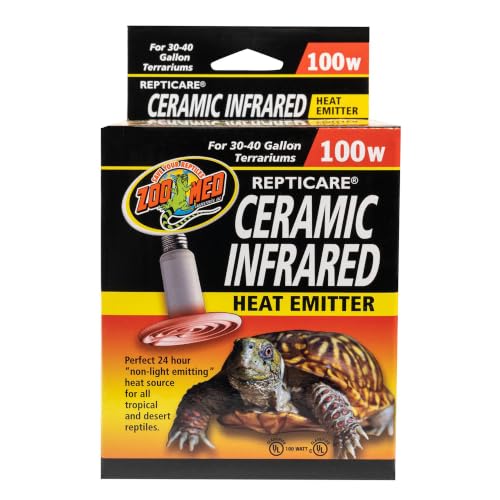 Best budget night heat Zoo Med ReptiCare Ceramic Infrared Heat Emitter, 100W $21.55iPrice as of Oct 16, 8:01 AM UTC. Product prices and availability are accurate as of the date/time indicated and are subject to change. Any price and availability information displayed on Amazon at the time of purchase will apply to the purchase of this product. Amazon
 - Best budget night heat Ceramic heat emitter, 100W (E27) Amazon UK
-
 Best for small enclosures Zoo Med Repti Basking Spot Lamp, 50W $19.99iPrice as of Oct 16, 8:01 AM UTC. Product prices and availability are accurate as of the date/time indicated and are subject to change. Any price and availability information displayed on Amazon at the time of purchase will apply to the purchase of this product. Amazon
 - Best for small enclosures LUCKY HERP Reptile Basking Bulb, 50W (2 pack, E27) Amazon UK
-
 Best dual dome Zoo Med Combo Deep Dome Dual Lamp Fixture $59.98iPrice as of Oct 16, 8:01 AM UTC. Product prices and availability are accurate as of the date/time indicated and are subject to change. Any price and availability information displayed on Amazon at the time of purchase will apply to the purchase of this product. Amazon
 -
 Best dual dome Exo Terra Reptile Dome Fixture, Large (PT2349) Amazon UK
Prices from Amazon as of Oct 16, 8:01 AM UTC and may change. Details
How we chose
We did not test these lamps. We compared them on what the care sources say makes good reptile heat, and on the makers’ own specs.
- The kind of heat. ReptiFiles explains that infrared comes in three bands. IR-A, from halogen bulbs and the sun, reaches deepest into the body. IR-B comes from halogen bulbs and deep heat projectors. IR-C, from deep heat projectors, ceramic emitters and heat mats, warms only the skin surface. That is why halogen is the usual first choice for a basking spot.
- Light or no light. Basking lizards expect heat and light together, like the sun. At night, the RSPCA says all lights go off; if extra warmth is needed, it suggests a heater that gives no light, such as a ceramic.
- Coverage. ReptiFiles recommends at least two halogen bulbs side by side for a bearded dragon, so the warm patch covers the whole body.
- Thermostat control. Every lamp here can be run on a thermostat. Mercury vapor bulbs cannot, so they are not on the list.
- Established makers with published data. Arcadia, for example, publishes basking temperatures by distance for its Deep Heat Projector.
Zoo Med Repti Tuff Halogen 75W: best basking bulb
Best basking bulb (US)
Zoo Med Repti Tuff Splashproof Halogen Lamp, 75W (2 pack)
A 75W halogen heat lamp from Zoo Med, sold as a two-pack. Halogen bulbs give the bright, intense heat that basking lizards use, and two side by side warm the whole body rather than one small spot.
- Type
- Halogen heat lamp
- Wattage
- 75W
- Pack
- 2 bulbs
- Rated life
- Up to 2,500 hours (per Zoo Med)
Best for
Building a basking spot in a US setup, two bulbs in two domes over a flat stone.
Worth knowing
Zoo Med markets it for turtle tanks, but it is a standard halogen heat bulb. Use a dome with a ceramic socket rated for the wattage, and always run it through a thermostat.
Best basking bulb (UK)
Halogen flood basking bulb, 75W (E27)
The UK equivalent of a halogen basking bulb: a 75W halogen flood with an E27 screw fitting. A flood spreads heat over a wider patch than a narrow spot bulb, which suits a dragon that basks full length.
- Type
- Halogen flood
- Wattage
- 75W (try 50W or 100W if the basking spot is too hot or too cool)
- Fitting
- E27 screw
Best for
UK keepers building a basking spot; two bulbs side by side cover a large adult.
Worth knowing
Pick a halogen flood made for reptile use, not a mercury vapor bulb (those cannot go on a thermostat). Run it through a dimming thermostat and fit a bulb guard inside a wooden viv.
Who it suits: basking lizards such as bearded dragons and leopard geckos, and any reptile that needs a bright daytime hot spot.
What stands out: halogen gives the deep IR-A heat ReptiFiles ranks first, and the two-pack is exactly what its two-bulbs-side-by-side layout calls for. Zoo Med rates the bulbs for up to 2,500 hours.
Watch for: Zoo Med markets it for turtle tanks, but it is a standard halogen heat bulb. If the basking surface runs too hot, raise the lamp or drop to 50W (Zoo Med makes a 50W Repti Tuff too); if too cool, go up in wattage. In the UK, pick a halogen flood made for reptiles, not a mercury vapor bulb.
Arcadia Optimal Heating Pack: best day and night pair
Best day and night pack (US)
Arcadia Optimal Heating Pack (75W Halogen Flood and 50W Deep Heat Projector)
Two Arcadia heat lamps in one box: a 75W halogen flood for the daytime basking spot and a 50W Deep Heat Projector, which Arcadia says gives virtually no visible light, for background or night heat.
- Halogen
- 75W flood
- Deep Heat Projector
- 50W, infrared, virtually no visible light
- Model
- RARHP1Z
Best for
A lizard setup that needs bright basking heat by day and gentle no-light heat on cold nights.
Worth knowing
Each lamp needs its own ceramic-socket dome and thermostat. Arcadia advises a dimming thermostat for the Deep Heat Projector, and a dimming one suits the halogen too.
Who it suits: a lizard setup in a home that gets cold at night, where you need both a bright basking bulb and a no-light heater.
What stands out: one box holds a 75W halogen flood for the day and a 50W Deep Heat Projector for background or night heat, both from Arcadia, which publishes heat data for its lamps.
Watch for: you still need two domes with ceramic sockets and, ideally, two thermostats, since the two lamps do different jobs on different schedules. Many homes never need the night lamp, so measure your overnight low first.
Arcadia Deep Heat Projector: best heat without light
Best heat without light
Arcadia Deep Heat Projector, 50W
An infrared heat emitter that gives off heat with very little visible light, so it can run at night if the room gets too cold without disturbing the dark period.
- Power
- 50W
- Output
- Infrared heat, very little visible light
- Fitting
- E27, ceramic socket required
- Control
- Dimming or proportional thermostat
Best for
Night heat in a cold room, or as a second overhead heat source.
Worth knowing
ReptiFiles says deep heat projectors need a proportional (dimming) thermostat. Use a ceramic-socket dome; it gets very hot.
Who it suits: snakes such as ball pythons that do not need a bright basking light, and lizards that need night heat. Arcadia says it gives virtually no visible light, so it can run day and night without breaking up the dark period.
What stands out: it gives IR-B as well as IR-C, so it warms deeper than a ceramic. Arcadia’s own figures give a feel for its strength:
| Distance to basking zone | 50W | 80W |
|---|---|---|
| 6 in (150 mm) | 55°C (131°F) | 62°C (144°F) |
| 8 in (200 mm) | 45°C (113°F) | 51°C (124°F) |
| 12 in (300 mm) | 36°C (97°F) | 44°C (111°F) |
| 16 in (400 mm) | 29°C (84°F) | 36°C (97°F) |
Watch for: it comes in 50W and 80W; pick by your room and enclosure. Arcadia recommends a dimming thermostat and a non-contact thermometer to check the result. It gets very hot, so use a ceramic-socket dome and a guard if it mounts inside the enclosure.
Zoo Med Ceramic Heat Emitter 100W: best budget night heat
Best budget night heat (US)
Zoo Med ReptiCare Ceramic Infrared Heat Emitter, 100W
A ceramic heater that gives off heat but no light. Zoo Med says it can raise the air temperature 10 to 20°F above the room. Use it only if your room gets colder at night than your sources allow.
- Type
- Ceramic infrared heat emitter (no light)
- Wattage
- 100W
- Effect
- Raises air 10 to 20°F above room temperature (per Zoo Med)
Best for
Cold homes where night temperatures in the enclosure fall below the range your vet or care sheet gives.
Worth knowing
It gets very hot, needs a ceramic-socket dome, and must run on a thermostat. Many homes never need it; measure first.
Best budget night heat (UK)
Ceramic heat emitter, 100W (E27)
The UK equivalent of a ceramic heat emitter: a screw-in ceramic heater that gives heat but no light, for night warmth in a cold room.
- Type
- Ceramic heat emitter, no light
- Wattage
- 100W (lower wattages exist for small enclosures)
- Fitting
- E27 screw
Best for
UK keepers who need night heat with no light, at the lowest outlay.
Worth knowing
It gets hot enough to burn, so it needs a ceramic holder, a guard inside a wooden vivarium, and a thermostat. Pick a lower wattage for a small enclosure.
Who it suits: homes where the enclosure falls below your species’ night minimum. The RSPCA suggests a non-light heater such as a ceramic for night heat.
What stands out: it gives heat but no light. Zoo Med says it can raise the air temperature 10 to 20°F above the room.
Watch for: ceramic heat is IR-C, which warms the surface of the skin rather than deep into the body, so it is background warmth, not a basking spot. It gets hot enough to burn, needs a ceramic socket, and must run on a thermostat.
Zoo Med Repti Basking Spot 50W: best for small enclosures
Best for small enclosures (US)
Zoo Med Repti Basking Spot Lamp, 50W
A white 50W basking bulb. ReptiFiles and the Long Island Bird and Exotics vet clinic both suggest two 50W white heat bulbs side by side for a veiled chameleon, rather than one stronger bulb.
- Type
- White basking spot bulb
- Wattage
- 50W
Best for
US keepers building the basking spot in a screen cage, two bulbs in a dual dome.
Worth knowing
A chameleon may sit under heat until it burns, so check the branch top with a temperature gun and run the bulbs on a dimming thermostat. Never use colored or red bulbs.
Best for small enclosures (UK)
LUCKY HERP Reptile Basking Bulb, 50W (2 pack, E27)
A two-pack of 50W basking bulbs with an E27 screw fitting, which matches the two-bulb, 50W setup ReptiFiles and the Long Island Bird and Exotics vet clinic describe.
- Wattage
- 50W
- Pack
- 2 bulbs
- Fitting
- E27 screw
- Rated life
- Up to 2,000 hours (per listing)
Best for
UK keepers who want both basking bulbs in one box.
Worth knowing
Run them through a dimming thermostat and check the branch top with a temperature gun. If the spot runs hot, raise the bulbs, lower the thermostat or drop a wattage.
Who it suits: smaller enclosures and species that need a gentler basking spot, such as a veiled chameleon, where a 75W halogen would overheat the space. ReptiFiles suggests two 50W white bulbs side by side for a veiled chameleon.
What stands out: a plain white basking bulb at a lower wattage, easy to dim and easy to find.
Watch for: a chameleon or a climbing gecko may sit under heat until it burns, so check the top of the branch with a temperature gun.
Side by side
| Lamp | Light | Main heat | Best use | Thermostat |
|---|---|---|---|---|
| Halogen flood (Zoo Med, UK flood) | Bright | IR-A and IR-B | Daytime basking | Dimming |
| Arcadia Heating Pack | Halogen bright, projector none | IR-A to IR-C | Day basking plus night heat | Dimming |
| Arcadia Deep Heat Projector | Virtually none | IR-B and IR-C | Snakes, night heat | Dimming |
| Ceramic heat emitter | None | IR-C | Night heat in a cold room | Any type |
| 50W basking spot | Bright | Light and heat | Small enclosures, chameleons | Dimming |
Domes, guards and fittings
A heat lamp is only as safe as what holds it. Every bulb here needs a dome with a ceramic socket rated for its wattage, and VCA advises placing heat sources outside the enclosure, over a screen top, so the animal cannot touch them.
Best dual dome (US)
Zoo Med Combo Deep Dome Dual Lamp Fixture
Two polished aluminum deep domes on one fixture, with ceramic sockets. It holds both halogen basking bulbs side by side, the layout ReptiFiles recommends so the warm patch covers the whole dragon.
- Domes
- Two deep domes, polished aluminum
- Sockets
- Ceramic, up to 160W each, 300W combined (per Zoo Med)
Best for
Running two basking bulbs over a mesh top from one fixture.
Worth knowing
Zoo Med rates it for up to 160W per socket and 300W combined. Both bulbs still go through a thermostat.
The Zoo Med Combo Deep Dome holds two bulbs side by side from one fixture, the layout ReptiFiles recommends for a basking lizard. Zoo Med rates it for up to 160W per socket and 300W combined.
Single dome, US and UK
Exo Terra Reptile Dome Fixture, Large (PT2349)
An aluminum reflector dome with a heat-resistant ceramic socket and a 6 ft cord with an inline switch. It holds a basking bulb or ceramic heater over the mesh top of an enclosure.
- Diameter
- 21 cm (about 8.3 in)
- Socket
- Heat-resistant ceramic
- Cord
- 180 cm (6 ft) with inline switch
- Model
- PT2349
Best for
Holding halogen basking bulbs over a mesh top; buy two for a two-bulb basking spot.
Worth knowing
Check the maximum wattage printed on the fixture against your bulb. The dome sits on mesh, so the mesh will block some heat and light.
Inside a wooden or PVC vivarium, where lamps mount on the ceiling, the RSPCA says heat lamps must be guarded, to prevent burns and injury if a bulb shatters.
Bulb guard for vivariums (UK)
ProRep Heater Guard, Standard Round
A mesh guard that fits around a lamp inside a vivarium. The Royal Veterinary College says heat sources should be guarded to prevent burns, and corn snakes climb.
- Shape
- Round
- Size
- Standard
- Opening
- Easy-open front (per ProRep)
Best for
Any heat lamp or Deep Heat Projector mounted inside a UK wooden or PVC vivarium.
Worth knowing
Check that it fully encloses your bulb and fits your holder. Measure your lamp before ordering.
What to avoid
- Heat rocks. PetMD calls basking “hot rocks” among the most dangerous heating methods and the most common cause of burns in reptiles.
- Any lamp without a thermostat. The MSD Veterinary Manual says heat lamps should be used with extreme caution because overheating is common. See the best reptile thermostats.
- Red, blue or purple night bulbs. They still give off light and break up the dark period. Use a projector or ceramic instead.
- Mercury vapor bulbs in small enclosures. They cannot be dimmed by a thermostat, so the heat depends only on how high the bulb hangs.
- Plastic sockets, and domes left hanging by their clamp. Heat bulbs and projectors need a ceramic socket, and a dome should rest securely on the mesh where it cannot fall.
- Climbing decor right under a lamp. PetMD explains that reptiles often fail to move away from dangerous heat, and burns can take days to show.
By species
- Bearded dragon: two 75W halogens side by side, ceramic for night only if needed. See bearded dragon lighting and heating.
- Leopard gecko: a 50W halogen over a flat stone. See leopard gecko lighting and heating.
- Ball python: a deep heat projector or radiant panel. See ball python lighting and heating.
- Corn snake: a halogen over the basking spot. See corn snake lighting and heating.
- Veiled chameleon: two 50W white bulbs over the top branches. See veiled chameleon lighting and heating.
- Crested gecko: often no heat lamp at all. See crested gecko lighting and heating.
See a reptile vet about any burn, however small it looks. This page is general guidance, not veterinary advice.
Halogen by day, a projector or ceramic only if the nights run cold, a ceramic-socket dome for each, and a thermostat on every one. Get those four right and the rest is fine tuning.