
A thermostat is the cheapest insurance in a reptile setup. It is the part that stops a heat lamp or mat from cooking the enclosure on a hot afternoon, and the RSPCA says every heat source needs one. The catch is that thermostats are not interchangeable: the right one depends on whether your heater gives off light. This guide sorts the best options by the heat source they suit.
The short version
-
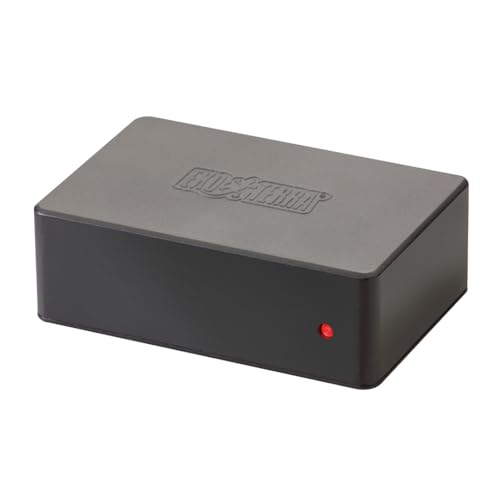 Best overall (dimming and pulse) Exo Terra Dimming and Pulse Proportional Thermostat $82.99iPrice as of Oct 16, 8:01 AM UTC. Product prices and availability are accurate as of the date/time indicated and are subject to change. Any price and availability information displayed on Amazon at the time of purchase will apply to the purchase of this product. Amazon
 -
 Best overall (dimming and pulse) Habistat Dimming Thermostat, 600W Amazon UK
 -
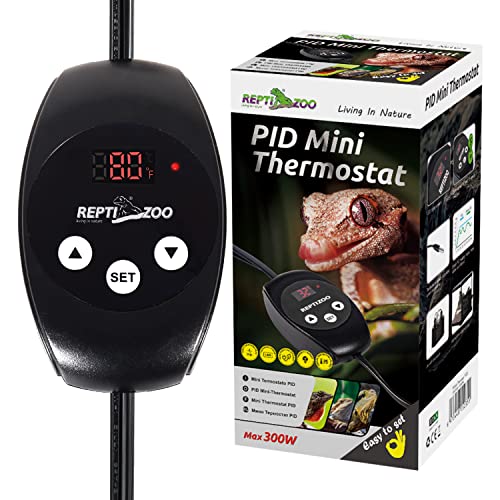 Best budget dimming REPTI ZOO Dimming Thermostat (PID) $27.99iPrice as of Oct 16, 8:01 AM UTC. Product prices and availability are accurate as of the date/time indicated and are subject to change. Any price and availability information displayed on Amazon at the time of purchase will apply to the purchase of this product. Amazon
 -
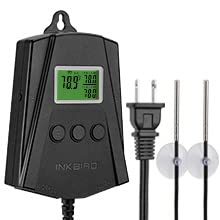
 Best for heat mats, with timer Inkbird ITC-306T Heating Thermostat with Timer $32.99iPrice as of Oct 16, 8:01 AM UTC. Product prices and availability are accurate as of the date/time indicated and are subject to change. Any price and availability information displayed on Amazon at the time of purchase will apply to the purchase of this product. Amazon
 - Best for heat mats, with timer Inkbird ITC-306T Heating Thermostat with Timer Amazon UK
-
 Best with phone alerts Inkbird IPT-2CH WiFi Reptile Thermostat (2 probes, 2 outlets) $36.89iPrice as of Oct 16, 8:01 AM UTC. Product prices and availability are accurate as of the date/time indicated and are subject to change. Any price and availability information displayed on Amazon at the time of purchase will apply to the purchase of this product. Amazon
 - Best pulse for mats and ceramics (UK) Habistat Pulse Proportional Thermostat Amazon UK
-
 Best on/off with alarm Zoo Med ReptiTemp Digital Thermostat $38.68iPrice as of Oct 16, 8:01 AM UTC. Product prices and availability are accurate as of the date/time indicated and are subject to change. Any price and availability information displayed on Amazon at the time of purchase will apply to the purchase of this product. Amazon
Prices from Amazon as of Oct 16, 8:01 AM UTC and may change. Details
How we chose
We did not test these thermostats. We matched them against what the care sources say each heat source needs, then checked the makers’ specs.
- The right control type for the heater. This matters more than anything else (see the table below). ReptiFiles says radiant panels and deep heat projectors should run on a dimming or proportional thermostat, while ceramic emitters can use an on/off one. Arcadia recommends a dimming thermostat for its Deep Heat Projector.
- Max load. The total wattage of everything plugged in must stay under the rating. Two 75W halogens is 150W.
- A probe you can fix in place. The RSPCA puts the probe just above the substrate where the animal sits, under the heat.
- Day and night settings. Useful where nights should run cooler than days.
- Safety extras: settings memory after a power cut, and alarms.
| Type | How it works | Use it with |
|---|---|---|
| Dimming | Turns the power up or down smoothly | Halogen bulbs and deep heat projectors. The light stays steady. |
| Pulse proportional | Rapid bursts of power, shorter near the set point | Heaters with no light: mats, ceramics, radiant panels |
| On/off | Full power until the set point, then off | Heat mats and ceramic emitters. Not for bulbs, which flash on and off. |
The MSD Veterinary Manual warns that temperatures only 10°F (about 6°C) above a species’ upper limit can kill some animals. That is the job these units do.
Exo Terra Dimming and Pulse: best overall
Best overall (US)
Exo Terra Dimming and Pulse Proportional Thermostat
A reptile thermostat with both dimming and pulse-proportional control and a waterproof probe. Dimming runs a halogen lamp or Deep Heat Projector smoothly; pulse control suits heat mats and ceramic heaters.
- Model
- PT2461
- Max load
- 300 W
- Range
- 64 to 100°F (18 to 38°C)
- Control
- Dimming and pulse proportional
Best for
Controlling a Deep Heat Projector, halogen lamp or ceramic emitter in a US setup.
Worth knowing
Put the probe where the snake actually sits (in or by the warm hide), and check it against a separate thermometer. It has no built-in night timer.
Best overall (UK)
Habistat Dimming Thermostat, 600W
A dimming thermostat made for light-emitting heat bulbs. Instead of switching the bulb on and off, it turns the power up or down to hold the temperature, so the light stays steady.
- Type
- Dimming thermostat
- Max load
- 600W
- Min load
- 40W
- Made for
- Light-emitting heat bulbs
Best for
UK setups running halogen basking bulbs.
Worth knowing
It needs a minimum load of 40W, so it will not run a very small bulb on its own.
Who it suits: anyone running a halogen basking bulb, a deep heat projector or a ceramic, who wants one thermostat that handles all of them properly.
What stands out: it offers both dimming and pulse proportional control with a waterproof probe, so it covers light-giving and non-light heaters alike. Exo Terra also makes a 600W version that switches between separate day and night set points using a light sensor on the probe, which suits bigger setups.
Watch for: the model here is rated for 300W with a set range of 64 to 100°F, and it has no built-in night timer. In the UK, the Habistat dimming unit is the equivalent pick for bulbs; it handles 600W but needs at least 40W to dim correctly.
REPTI ZOO Dimming (PID): best budget dimming
Best budget dimming (US)
REPTI ZOO Dimming Thermostat (PID)
A low-cost dimming thermostat made for light-emitting heat bulbs. It turns the power to the basking bulbs up or down to hold the set temperature, so the light stays steady instead of switching on and off.
- Type
- Dimming thermostat, PID control
- Made for
- Light-emitting heat bulbs and heaters
- Extras
- Settings memory
Best for
US keepers who want a dimming thermostat for halogen basking bulbs on a budget.
Worth knowing
Put the probe at the basking spot and confirm the surface with an infrared thermometer. Check that its load rating covers every bulb you plug into it.
Who it suits: US keepers running halogen basking bulbs who want true dimming at a low price.
What stands out: it dims rather than switching, so the basking light stays steady through the day, and it keeps its settings in memory. REPTI ZOO lists it for light-emitting heat bulbs and heaters.
Watch for: check that its load rating covers every bulb you plug in. Confirm the basking surface with an infrared thermometer rather than trusting the display alone.
Inkbird ITC-306T: best for heat mats, with a timer
Best for heat mats
Inkbird ITC-306T Heating Thermostat with Timer
A plug-in on/off thermostat with a probe and two heating outlets, plus day and night time periods with separate targets. On/off control suits heat mats and other heaters that do not give off light.
- Control
- On/off, heating only
- Outlets
- 2 (heating)
- Max output
- 10 A
- Timer
- Day and night set points
Best for
Keeping a heat mat or heat cable under safe control, as a low-cost option.
Worth knowing
On/off control makes a light bulb flash on and off, so use a dimming stat for any lamp that gives light. Tape the probe in place so it cannot be moved.
Who it suits: heat mats, heat cables and ceramic heaters, in either market. It is pre-wired, so you plug the heater into it and it into the wall.
What stands out: it has two heating outlets and a built-in timer with separate day and night set points, so a mat can run a little cooler overnight without a second device.
Watch for: it is an on/off thermostat. Never use it with a basking bulb, which will flash on and off. Tape the probe in place so it cannot be moved.
Inkbird IPT-2CH WiFi: best with phone alerts
Best with phone alerts (US)
Inkbird IPT-2CH WiFi Reptile Thermostat (2 probes, 2 outlets)
A heating thermostat with two outlets, each run by its own probe, so one unit can hold two heat mats or two enclosures at different temperatures. It connects to the Inkbird app over 2.4 GHz WiFi for remote readings, records and high and low temperature alarms.
- Outlets
- 2, each with its own probe
- Max load
- 250W per outlet (per listing)
- Range
- 32 to 113°F, 0 to 45°C (per Inkbird)
- Alarms
- High and low temperature, probe fault
- App
- Inkbird app over 2.4 GHz WiFi
Best for
Heat mats, and keepers who want a phone alert if an enclosure runs too hot or too cold while they are out.
Worth knowing
The Amazon listing calls it a heat mat thermostat and does not describe a dimming mode, so for a halogen basking bulb a dimming thermostat keeps the light steady. The listing gives 250W per outlet, and the app needs 2.4 GHz WiFi.
Pulse thermostat for non-light heaters (UK)
Habistat Pulse Proportional Thermostat
A UK thermostat that feeds a heater short, fast pulses of full power and changes their length as the temperature nears the set point. That holds a steadier temperature than plain on/off switching. Habistat makes it for heaters that give no light.
- Control
- Pulse proportional
- Use with
- Ceramic heaters, heat mats, heat cables
- Not for
- Light-emitting bulbs
Best for
UK keepers running a ceramic heat emitter, radiant heat panel or heat mat.
Worth knowing
Not for bulbs that give light: the pulsing makes them flicker. Use a dimming thermostat for halogen basking lamps and deep heat projectors.
Who it suits: keepers with two heat mats or two enclosures, and anyone who wants to know about a problem before they get home.
What stands out: two outlets with a probe each, so two zones run at different temperatures. Inkbird’s app shows readings remotely, keeps records and sends high and low temperature alarms and a probe fault alarm, which catches a probe that has been knocked out of place.
Watch for: the app needs 2.4 GHz WiFi, and the Amazon listing gives 250W per outlet. It is sold for heat mats; use a dimming thermostat for bulbs. In the UK, the Habistat Pulse is a well-known choice for mats and ceramics, though it has no app.
Zoo Med ReptiTemp: best on/off with an alarm
Best on/off with alarm (US)
Zoo Med ReptiTemp Digital Thermostat
A digital on/off thermostat with a remote probe. It switches heat sources on and off to hold a set temperature, keeps its settings after a power cut, and sounds an alarm at extreme highs or lows.
- Type
- Digital on/off thermostat
- Range
- 50 to 122°F
- Max load
- 600W of heating
- Probe
- Remote sensor on a 6 ft cable
- Extras
- Settings memory, high and low alarm
Best for
US keepers who want every heat source under thermostat control, including a night ceramic heater.
Worth knowing
It is an on/off thermostat, so a basking bulb will switch fully on and off rather than dimming. Put the probe at the basking spot and check the surface with an infrared thermometer.
Who it suits: US keepers running a ceramic heat emitter or a mat who want a plain digital thermostat from a big reptile brand.
What stands out: a 600W rating, a wide 50 to 122°F range, a remote probe on a 6 ft cable, settings memory after a power cut, and an alarm at extreme highs or lows.
Watch for: like the Inkbird ITC-306T, it is on/off only, so it is not the right choice for a basking bulb.
Side by side
| Thermostat | Control | Max load | Day and night | Extras | Markets |
|---|---|---|---|---|---|
| Exo Terra Dimming and Pulse | Dimming and pulse | 300W | No | Waterproof probe | US |
| Habistat Dimming | Dimming | 600W (40W minimum) | No | Made for light-emitting bulbs | UK |
| REPTI ZOO Dimming | Dimming (PID) | See listing | No | Settings memory | US |
| Inkbird ITC-306T | On/off | 10 A | Yes, timer | Two heating outlets | US and UK |
| Inkbird IPT-2CH | Heating control, two zones | 250W per outlet | No | WiFi app, alarms | US |
| Zoo Med ReptiTemp | On/off | 600W | No | Alarm, settings memory | US |
| Habistat Pulse | Pulse | See listing | No | For non-light heaters | UK |
Which one for your heater
- Halogen basking bulb: dimming. Exo Terra, REPTI ZOO or, in the UK, Habistat Dimming.
- Deep heat projector or radiant panel: dimming or proportional (ReptiFiles, Arcadia).
- Ceramic heat emitter: any of the three types. ReptiFiles says on/off is fine.
- Heat mat: on/off or pulse. The RSPCA puts the probe directly over the mat.
Two heat sources on different jobs, such as a basking bulb and a night ceramic, are easiest on two thermostats, each with its own probe in the right spot.
What to avoid
- No thermostat at all. The RSPCA says every heat source needs one, and the MSD manual explains how quickly overheating kills.
- An on/off thermostat on a basking bulb. The light flicks on and off all day. Use dimming.
- A household light dimmer in place of a thermostat. It sets a power level but never reads the temperature, so a hot day still overheats the enclosure.
- Heat rocks. PetMD calls them among the most dangerous heating methods and the most common cause of burns. No thermostat makes them safe.
- A loose probe. A probe that gets moved or buried reads the wrong spot, and the thermostat then drives the heater too hard.
- Trusting the display alone. The RSPCA warns thermostats are not always accurate and says to record temperatures daily, which needs a separate thermometer. See our best reptile thermometers.
By species
- Bearded dragon: dimming thermostat for two halogen basking bulbs. See bearded dragon lighting and heating.
- Leopard gecko: dimming for the halogen, plus on/off or pulse for a mat if used. See leopard gecko lighting and heating.
- Ball python: dimming or proportional for a deep heat projector or radiant panel. See ball python lighting and heating.
- Corn snake: dimming for the basking lamp. See corn snake lighting and heating.
- Veiled chameleon: dimming for the basking bulbs. See veiled chameleon lighting and heating.
- Crested gecko: often no heat at all; if needed, a dimming thermostat on a low-wattage bulb. See crested gecko lighting and heating.
See a reptile vet about any burn, however small it looks. This page is general guidance, not veterinary advice.
Match the thermostat to the heater first and everything else second: dimming for anything that glows, pulse or on/off for anything that does not. Then fix the probe where the animal sits and check it with a thermometer of your own.