
You cannot feel the temperature your reptile lives in, and you certainly cannot see its UVB. Measuring tools are cheap next to the lamps they check, and they catch most setup mistakes before the animal pays for them. The trick is knowing that each tool reads something different: a temp gun reads surfaces, a probe gauge reads the air, and a UV meter reads UVB. This guide covers the best of each and which ones you actually need.
The short version
-

 Best overall: infrared temp gun Etekcity Lasergrip Infrared Thermometer $24.99iPrice as of Oct 16, 8:01 AM UTC. Product prices and availability are accurate as of the date/time indicated and are subject to change. Any price and availability information displayed on Amazon at the time of purchase will apply to the purchase of this product. Amazon
 - Best overall: infrared temp gun Etekcity Lasergrip Infrared Thermometer Amazon UK
-
 Best probe thermometer Exo Terra Digital Thermometer with probe $16.49iPrice as of Oct 16, 8:01 AM UTC. Product prices and availability are accurate as of the date/time indicated and are subject to change. Any price and availability information displayed on Amazon at the time of purchase will apply to the purchase of this product. Amazon
 - Best probe thermometer Exo Terra Digital Thermometer with probe Amazon UK
-
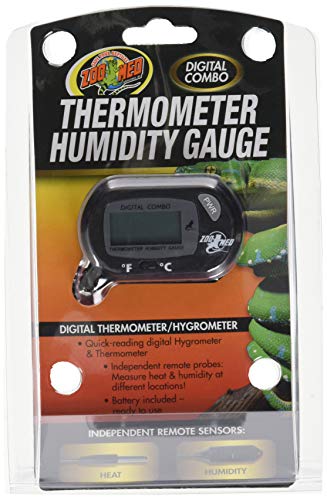
 Best thermometer and hygrometer Zoo Med Digital Thermometer and Humidity Gauge (TH-31) $12.99iPrice as of Oct 16, 8:01 AM UTC. Product prices and availability are accurate as of the date/time indicated and are subject to change. Any price and availability information displayed on Amazon at the time of purchase will apply to the purchase of this product. Amazon
 - Best thermometer and hygrometer Zoo Med Digital Thermometer and Humidity Gauge (TH-31) Amazon UK
-
 Best budget, with min and max memory ThermoPro (TempPro) TP50 Digital Thermometer and Hygrometer $10.99iPrice as of Oct 16, 8:01 AM UTC. Product prices and availability are accurate as of the date/time indicated and are subject to change. Any price and availability information displayed on Amazon at the time of purchase will apply to the purchase of this product. Amazon
 - Best budget, with min and max memory ThermoPro (TempPro) TP50 Digital Thermometer and Hygrometer Amazon UK
-
 Best with phone alerts Govee WiFi Thermometer Hygrometer H5179 $39.99iPrice as of Oct 16, 8:01 AM UTC. Product prices and availability are accurate as of the date/time indicated and are subject to change. Any price and availability information displayed on Amazon at the time of purchase will apply to the purchase of this product. Amazon
 -

 Best UV index meter Solarmeter 6.5R Reptile UV Index Meter Amazon
 - Best UV index meter Solarmeter 6.5R Reptile UV Index Meter Amazon UK
Prices from Amazon as of Oct 16, 8:01 AM UTC and may change. Details
How we chose
We did not test these tools. We picked them for the jobs the care sources say need measuring, then checked the makers’ listings.
- Surface temperature at the basking spot. ReptiFiles measures basking temperatures as surface readings, which only an infrared thermometer can take in a second. It says to take readings once the heat has been on for about three hours.
- Air temperature at both ends. The MSD Veterinary Manual says every enclosure should have at least two thermometers, and to check temperatures just above the substrate where the pet rests.
- Highs and lows. The RSPCA warns that thermostats are not always accurate and says to record temperatures daily. The Royal Veterinary College recommends a thermometer that keeps the minimum and maximum, so you can see the overnight low without staying up.
- Humidity, where it matters. For tropical species, ReptiFiles measures humidity in the middle of the enclosure, so a remote probe helps.
- UV index, for UVB. UVB is invisible and fades long before the light does, so a meter is the only way to know what reaches the animal.
ReptiFiles’ advice is to own both a temp gun and a probe thermometer, because each reads something the other cannot.
Etekcity Lasergrip: best overall
Best overall: temp gun
Etekcity Lasergrip Infrared Thermometer
A handheld infrared thermometer that reads surface temperature without touching it. That is the reading that matters for a basking stone, which gets hotter than the air above it.
- Measures
- Surface temperature, no contact
- Units
- °F and °C
- Use
- Basking spot, cool end and night checks
Best for
Checking the basking surface and the cool end in seconds.
Worth knowing
It reads surfaces, not air. Pair it with a probe thermometer, and take readings once the lamps have been on for a few hours.
Who it suits: every keeper with a heat lamp. If you buy only one tool, buy this.
What stands out: point, pull the trigger, and it reads the surface of the basking stone, the cool floor or the top of a branch without touching it. The US listing gives a range far beyond anything a reptile setup needs and adjustable emissivity. It is a mainstream tool with a huge number of buyers in both markets.
Watch for: it reads only surfaces, not the air. Take the reading where the animal’s body actually lies, after the lamps have been on for a few hours. PetMD notes that reptiles often fail to move away from dangerous heat, which is exactly what a quick check of the basking surface catches.
Exo Terra Digital Thermometer: best probe thermometer
Best probe thermometer
Exo Terra Digital Thermometer with probe
A small digital thermometer with a remote probe and minimum/maximum memory, so you can see how cold the enclosure got overnight without being up to check.
- Type
- Digital, remote probe
- Units
- °C and °F
- Memory
- Minimum and maximum
Best for
Leaving in place to track air temperature at the cool end and overnight lows.
Worth knowing
One probe reads one spot. Use two (warm and cool end) or move it around during your first week.
Who it suits: anyone who wants a gauge on the outside of the glass and a probe at animal level inside, in either market.
What stands out: a remote probe and minimum and maximum memory, so you see the coldest point of the night at a glance.
Watch for: one probe reads one spot. Use two (warm end and cool end), or move one around during your first week.
Zoo Med TH-31: best thermometer and hygrometer
Best thermometer and hygrometer
Zoo Med Digital Thermometer and Humidity Gauge (TH-31)
A small digital gauge with a probe that shows temperature and humidity on one screen. ReptiFiles names this Zoo Med gauge for crested gecko setups.
- Display
- Digital
- Probe
- Waterproof
- Battery
- 1 x LR44
Best for
Watching the top-of-tank temperature and the humidity cycle after each misting.
Worth knowing
Put the probe near the basking branch, not on the floor. Buy two if you want a reading at the top and bottom.
Who it suits: species where humidity matters as much as heat, such as crested geckos, ball pythons and chameleons. It is sold in both markets.
What stands out: temperature and humidity on one small digital display, with a waterproof probe, from a big reptile brand.
Watch for: put the probe where you want to know the reading, not on the floor by default. For a climbing species, that is near the branches.
ThermoPro TP50: best budget, with min and max memory
Best budget (min and max)
ThermoPro (TempPro) TP50 Digital Thermometer and Hygrometer
A small digital gauge that shows temperature and humidity and keeps the highs and lows, which the Royal Veterinary College recommends for checking reptile heat.
- Reads
- Temperature and humidity
- Memory
- Min and max records
Best for
One at each end of the enclosure. The UK listing is a 2 pack.
Worth knowing
It reads the air where it sits, not the surface under the lamp. Pair it with an infrared thermometer.

Budget with two remote probes (US)
Digital reptile thermometer and hygrometer with remote probes
A digital gauge with remote probes, so you can read temperature and humidity in the middle of the cage, where ReptiFiles and the Long Island Bird and Exotics vet clinic say to measure humidity.
- Measures
- Temperature and humidity
- Probes
- Two external probes (US listing)
Best for
Tracking the daytime humidity dip and the night-time rise, plus ambient temperature.
Worth knowing
Cheap hygrometers drift. If a reading looks wrong, compare it with a second gauge before changing your misting.
Who it suits: keepers who want one gauge at each end without spending much. The UK listing is a two-pack.
What stands out: temperature, humidity, and the highs and lows the RVC recommends tracking. It is a mainstream household gauge with a very large number of buyers.
Watch for: it has no probe, so it reads the air where it sits. Place it at animal level, and pair it with a temp gun for the basking spot. If you would rather keep the display outside the enclosure, the two-probe gauge above reads two spots from one unit. Cheap hygrometers can drift, so if a reading looks wrong, compare it with a second gauge before you change anything.
Govee H5179 WiFi: best with phone alerts
Best with phone alerts (US)
Govee WiFi Thermometer Hygrometer H5179
A small temperature and humidity sensor that reports to the Govee app over WiFi, sends a notification when a reading goes outside the range you set, and keeps two years of data.
- Measures
- Air temperature and humidity
- Connection
- WiFi, Govee app
- Alerts
- App notification
- History
- Two years of data (per listing)
Best for
Watching overnight lows and humidity from your phone, and getting an alert if the room or enclosure runs cold.
Worth knowing
It reads the air where it sits, with no remote probe, so place it at animal level at the cool end and keep it dry and out of reach. It does not replace a temp gun for the basking surface.
Who it suits: keepers who work long days or travel, and anyone in a home that gets cold at night.
What stands out: it sends readings to the Govee app over WiFi and notifies your phone when the temperature or humidity leaves the range you set, with two years of stored data. A cold snap or a failed heater shows up on your phone, not hours later.
Watch for: there is no remote probe, so the whole unit sits where you want the reading, and it must stay dry. It is a monitor, not a controller: it will tell you about a problem, but the thermostat is what fixes it.
Solarmeter 6.5R: best UV index meter
Best UV index meter
Solarmeter Model 6.5R Reptile UV Index Meter
A handheld meter that reads the UV index (UVI) your lamp gives at any spot in the enclosure. Its sensor is weighted to the vitamin D range, and a Ferguson zone chart is printed on the front. ReptiFiles says it is the tool to use for measuring UVI.
- Reads
- UV index, 0.1 UVI resolution
- Accuracy
- Plus or minus 10%, NIST traceable (per seller listing)
- Power
- 9V battery
- Extra
- Ferguson zone chart on the meter
Best for
Setting the basking distance by reading instead of guessing, and knowing when a UVB tube has faded and needs replacing.
Worth knowing
It is a costly tool for one animal. Readings change fast with distance, so always measure at the height of your reptile's back on the basking spot.
Who it suits: keepers of strong baskers like bearded dragons, and anyone who wants to set the lamp height by reading rather than guessing.
What stands out: it reads the UV index at any spot, the same measure lamp makers use for their distance charts. ReptiFiles says the Solarmeter 6.5 is the only handheld meter that measures UVI accurately.
Watch for: it is the dearest tool here, and the animal never sees it. If you skip it, follow your lamp maker’s distance chart and replace tubes on schedule; VCA says every 9 to 12 months or as the maker directs.
Side by side
| Tool | Measures | Probe | Memory or alerts | Markets |
|---|---|---|---|---|
| Etekcity Lasergrip | Surface temperature | None (infrared) | No | US and UK |
| Exo Terra Digital | Air temperature | Remote probe | Min and max | US and UK |
| Zoo Med TH-31 | Air temperature and humidity | Waterproof probe | No | US and UK |
| ThermoPro TP50 | Air temperature and humidity | None | Min and max | US and UK |
| Two-probe reptile gauge | Temperature and humidity | Two remote probes | No | US |
| Govee H5179 | Air temperature and humidity | None | App alerts, 2 years of data | US |
| Solarmeter 6.5R | UV index | None | No | US and UK |
Which ones to own
- Everyone: a temp gun and one probe gauge. That covers the basking surface and the air.
- Two ends: a second probe gauge, or one with two probes, to meet the MSD manual’s two-thermometer rule.
- Humid species: make one of those gauges a hygrometer.
- Cold homes or long absences: add a WiFi monitor for alerts.
- Strong UVB: a UV index meter, especially for bearded dragons and chameleons.
What to avoid
- Trusting the thermostat display alone. The RSPCA warns thermostats are not always accurate. Check them with your own thermometer.
- Stick-on strip and dial gauges. They read the wall they are stuck to, not the spot where the animal sits, and they cannot read a basking surface. A digital gauge with a probe does the job properly.
- Measuring air at the basking spot and calling it the surface temperature. The two can differ a lot. Use the temp gun for surfaces.
- Checking only once. Take readings on the first few days at different times, and again whenever you change a bulb.
- Guessing UVB from how bright the lamp looks. UVB fades long before the visible light does.
By species
- Bearded dragon: temp gun, probe gauge and, ideally, a UV meter. See bearded dragon lighting and heating.
- Leopard gecko: temp gun for the basking stone, probe gauge at the cool end. See leopard gecko lighting and heating.
- Ball python: thermometer and hygrometer, plus a temp gun for the warm hide. See ball python lighting and heating.
- Crested gecko: thermometer and hygrometer; overheating is the bigger risk. See crested gecko lighting and heating.
- Corn snake: two gauges, one each end. See corn snake lighting and heating.
- Veiled chameleon: hygrometer probe mid-enclosure, temp gun on the basking branch. See veiled chameleon lighting and heating.
See a reptile vet if your animal seems unwell, whatever the gauges say. This page is general guidance, not veterinary advice.
A temp gun and a probe gauge are the two tools every setup needs; the rest depends on your species and your home. Measure on day one, write the numbers down, and measure again whenever anything changes.