
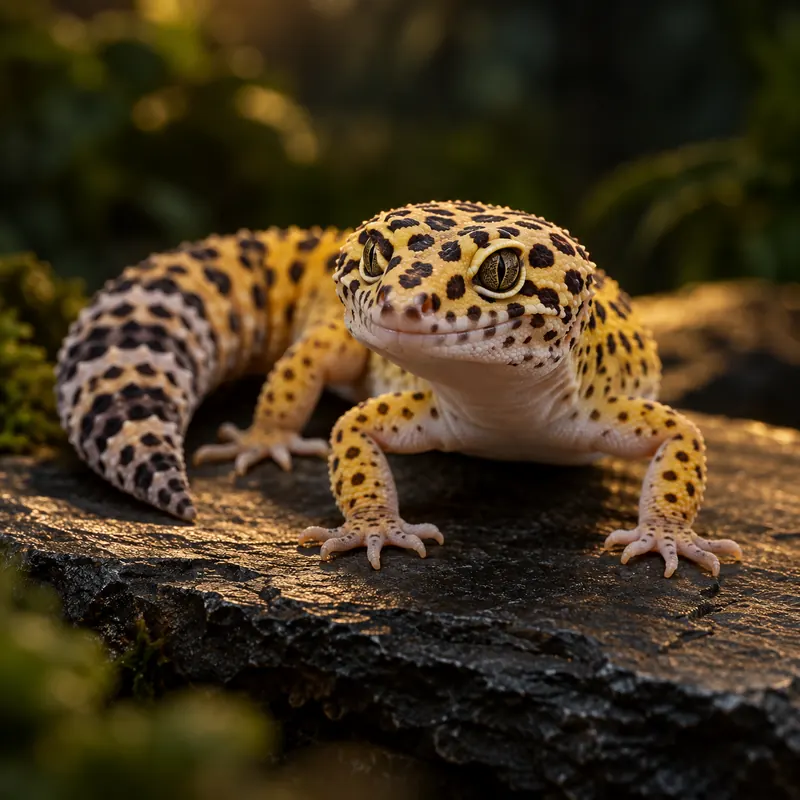
The first week is mostly about leaving your gecko alone. A new home is a big change, and many leopard geckos hide, skip meals and seem shy for days. That is normal. Your part is to keep conditions steady, offer food, and watch quietly.
Before it comes home
- The enclosure should already have run for about a week with temperatures checked daily. See the setup checklist.
- Use paper towels or tile as the floor for now. ReptiFiles says geckos should not go on loose substrate until they have passed quarantine and are healthy, and paper makes droppings easy to check.
- Have a few small insects and calcium ready.
- Know where your nearest reptile vet is.
Day one: the trip and the move
- Bring the gecko home in a small, secure, ventilated container, kept out of cold and direct sun.
- Go straight home. Place the gecko gently into a hide in the enclosure, or set its container inside and let it walk out.
- Close the doors, dim the room if you can, and leave it.
Days one to seven: hands off
The RSPCA advises avoiding handling for the first week after arrival. ReptiFiles suggests waiting two weeks. Both point the same way: let the gecko learn the tank before it has to learn you.
What you should do in the first week:
- Check temperatures morning and evening. Basking surface 94 to 97°F (34 to 36°C), warm hide 90 to 92°F (32 to 33°C), cool end 70 to 77°F (21 to 25°C) (ReptiFiles).
- Change the water daily (VCA, RSPCA).
- Spot clean droppings when you see them (RSPCA).
- Offer food in the evening, when leopard geckos are most active.
A simple daily routine for week one
| When | What |
|---|---|
| Morning | Read the basking surface and cool end; check the overnight low |
| Daytime | Leave the gecko alone; change the water |
| Evening | Offer a few small dusted insects; remove leftovers after 10 to 15 minutes |
| Any time | Spot clean droppings; note whether the gecko ate |
Keeping a short log of meals and temperatures makes it much easier to answer a vet’s questions if you ever need to.
Not eating? That is common
Many new geckos skip meals for the first few days while they settle. Offer a few small, dusted insects every day or two in the evening. Remove anything not eaten after 10 to 15 minutes, as PetMD advises, so loose crickets do not bother the gecko overnight.
If it has not eaten after about two weeks, ReptiFiles advises not starting handling and seeing a reptile vet. Before that, check your temperatures again: a warm hide that runs too cool is a common reason for a poor appetite, since a cold gecko cannot digest.
Starting to handle (week two onward)
ReptiFiles describes a gentle routine once the gecko is eating:
- Introduce your hand. Rest a hand in the enclosure for a few minutes each evening so the gecko gets used to your scent. Skip lotion or scented soap first.
- Short sessions. Start with about 5 minutes every other day, and build up slowly. The RSPCA suggests keeping sessions to about 10 to 15 minutes.
- Scoop, do not grab. Slide a hand under the belly and support all four feet. PetMD notes leopard geckos lack sticky toe pads and cannot cling like other geckos.
- Stay low. Sit on the floor or hold the gecko over a bed or table, in case it jumps.
- Never grab the tail. The tail can drop off as a defense (PetMD).
- Wash your hands before and after. Reptiles can carry Salmonella (RSPCA, PetMD).
Normal vs worrying
Normal in the first week:
- Hiding most of the day, especially in the warm or humid hide.
- Coming out around dusk to explore.
- Skipping a few meals.
- Turning pale or grayish before a shed. ReptiFiles notes geckos usually eat their shed skin, so you may never see it.
- A quick tail flick while hunting, which ReptiFiles links to excitement.
- A chirp or squeak when disturbed. ReptiFiles says this usually means the gecko is unhappy about being handled.
Worth a call to a reptile vet:
- No food at all after about two weeks.
- Weight loss, a skinny tail, a swollen belly or swollen eyes (signs PetMD lists).
- Runny or abnormal droppings, or none at all along with weight loss (RSPCA).
- Stuck shed on the toes, tail tip or around the eyes. The RSPCA says not to pull it, and to see a vet if it stays; ReptiFiles suggests a vet if stuck shed is still there after a week of gentle treatment.
- Twitching, swollen legs or trouble walking.
- Belly dragging. The RSPCA lists the belly held off the floor while moving as a healthy sign.
Quarantine if you keep other reptiles
If there are other reptiles in the house, keep the newcomer apart:
- In a separate room if possible.
- With its own tools, water bowls and feeding tongs.
- Feed and clean the other animals first and the new gecko last, washing your hands between.
- On paper towels, so you can watch droppings.
Ask your vet how long they recommend for quarantine and whether to test a fecal sample for parasites. Leopard geckos also live alone: the RSPCA says they do not need company and can be aggressive, and VCA notes males can be territorial. Do not add a tank-mate later.
Finding a reptile vet
Not every vet treats reptiles, so find one now, before you need it:
- Search the Association of Reptile and Amphibian Veterinarians (ARAV) find-a-vet directory, or ask local clinics whether they see “exotics.”
- Book a first check-up in the first few weeks. The RSPCA advises regular vet checks, and PetMD recommends a reptile-experienced vet for routine health checks.
- Save the emergency number for an exotic-capable clinic in case your regular vet is closed.
This guide is general information, not veterinary advice. If your gecko seems unwell, a vet who sees reptiles is the right person to ask.
A quiet first week is a good first week. Keep the heat steady, offer food without fuss, and let the gecko come to you. Handling can wait; trust cannot be rushed.